Cannabis comes with a lot of vocabulary. This glossary explains the words you'll see most often on our site, on our labels and on dispensary menus, in plain English. Where we've written a deeper guide, the term links to it.
It's part of our New to Cannabis series. Proof products are for adults 21 and over.
B
Budtender
The staff member at a dispensary who helps customers find products. A good budtender can explain ratios, serving sizes and product types; for questions about medications or health conditions, talk to your doctor. See what to ask your budtender.
C
Cannabinoid
A family of compounds found in the cannabis plant. THC, CBD, CBG, CBN and THCV are all cannabinoids, and each behaves a little differently in the body.
CBD (cannabidiol)
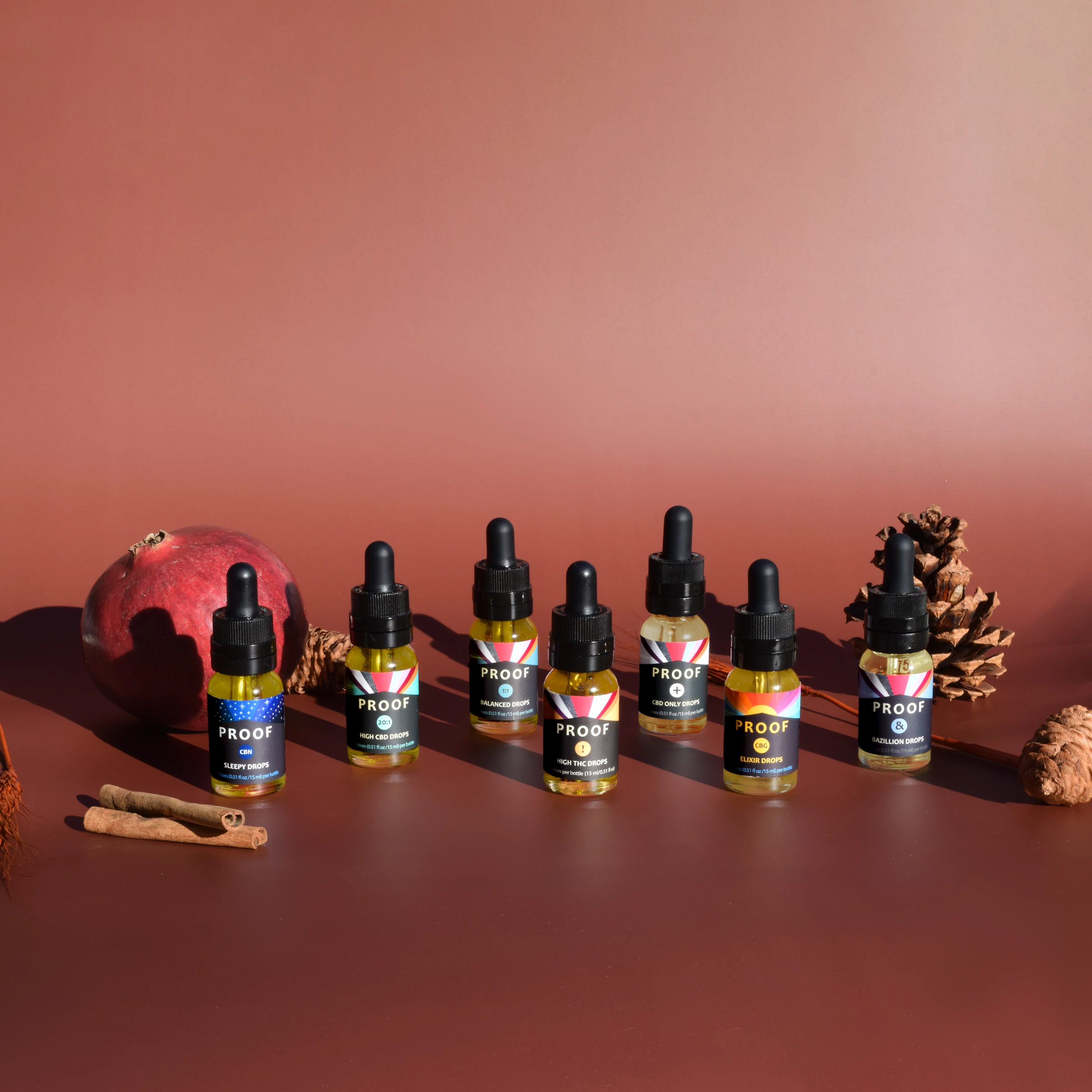
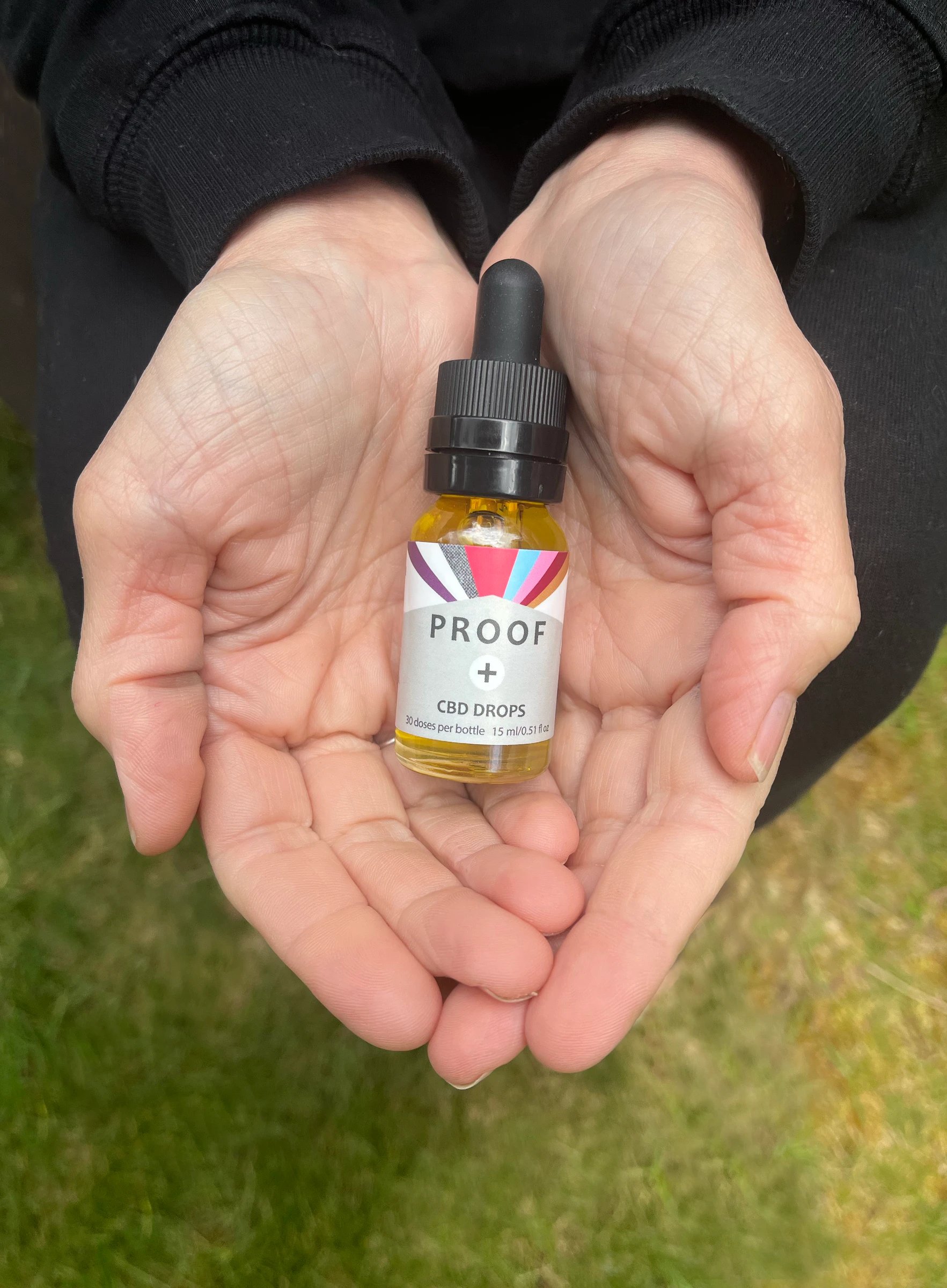
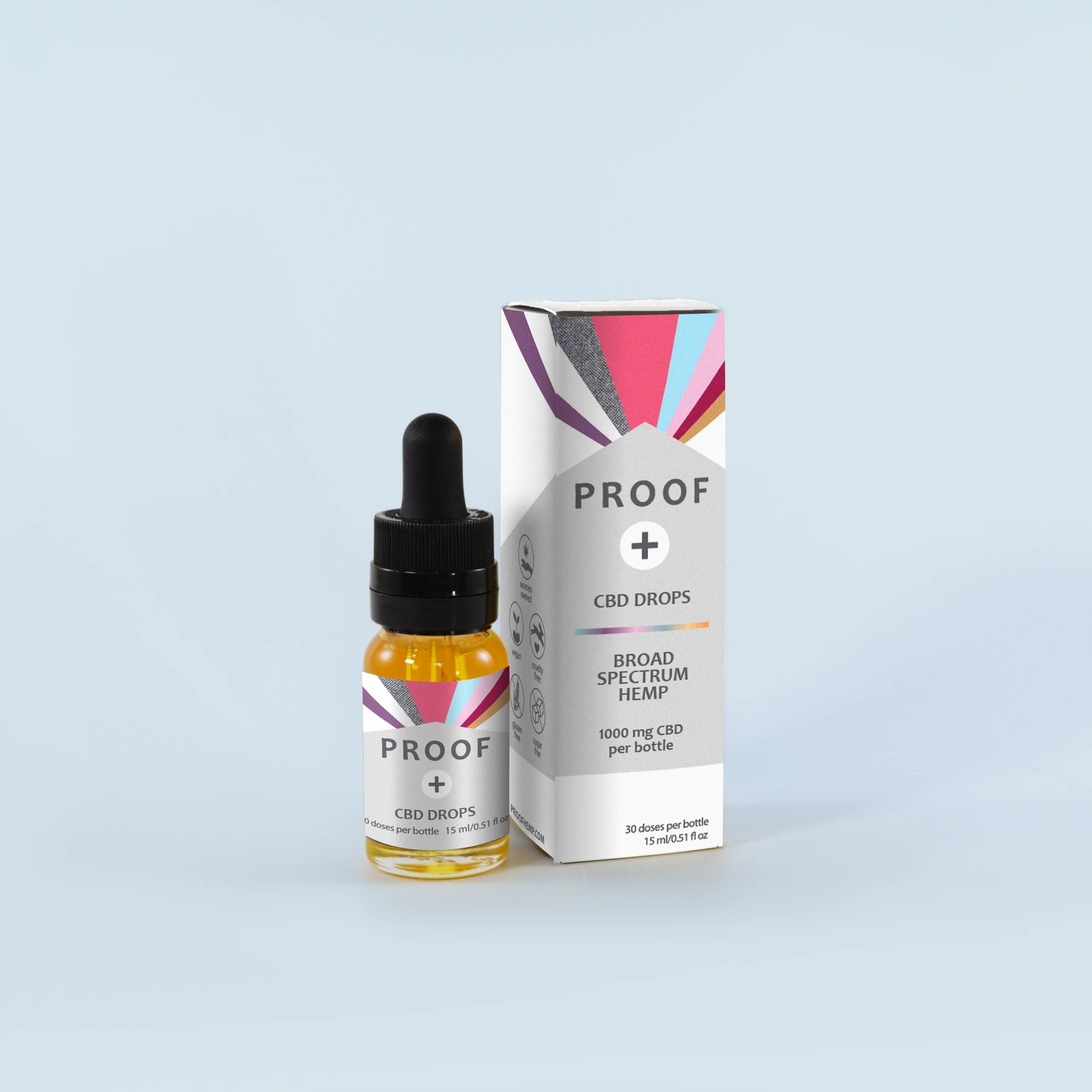
One of the most abundant cannabinoids in cannabis. Unlike THC, CBD doesn't cause a high. Proof's CBD Only Drops contain 33 mg CBD per half dropper and no THC. Read more in What Is CBD?
CBG (cannabigerol)
Sometimes called the "mother cannabinoid," because the plant makes other cannabinoids from CBG's acid form. Like CBD, it isn't known to cause a high. Proof uses it in CBG Elixir Drops and V Drops. Read CBG: The Mother of Cannabinoids and CBG vs CBD.
CBN (cannabinol)
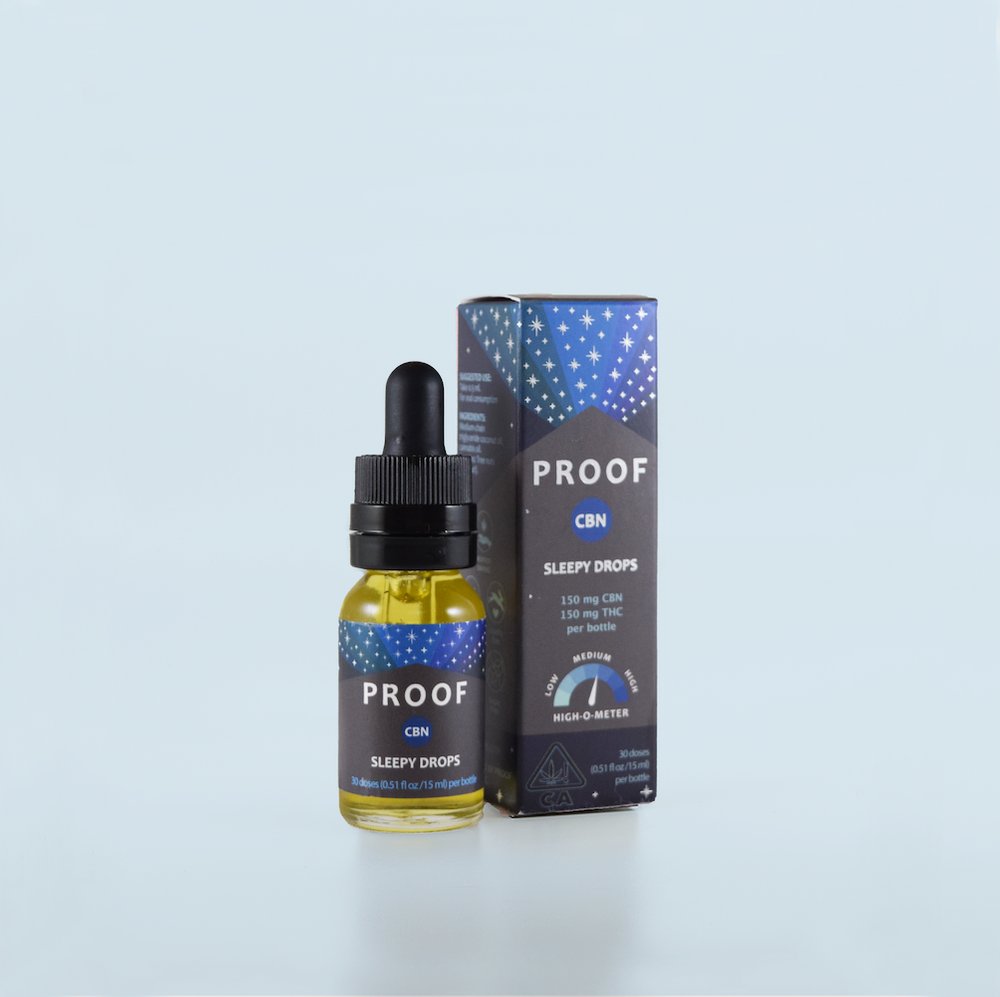
A cannabinoid that forms as THC ages. Proof's CBN Sleepy Drops contain 5 mg CBN + 5 mg THC per half dropper. Learn what research does and doesn't show in What Is CBN? and CBN vs Melatonin.
COA (Certificate of Analysis)
A lab report showing what a tested batch of cannabis contains, including potency (how much THC, CBD and other cannabinoids) and safety screening results. In California's licensed market, products are tested by a licensed lab before they reach the shelf. See How to Read a Cannabis COA and our lab testing page.
D
Decarboxylation
The "activation" step, usually done with heat, that converts THCA in raw cannabis into THC, the form that causes a high. Proof's Full Spectrum Oil is fully activated, so it doesn't need any extra heating. Learn more in What Is RSO?
Dispensary
A licensed store that sells cannabis to adults. Proof is sold at licensed California dispensaries; use our store locator to find one near you.
Dose (serving)
The amount you take at one time. On Proof drops, one serving is a half dropper (0.5 ml); on capsules, it's one capsule. See Serving Size and Tolerance.
E
Edible
Any cannabis product you eat or drink. Because swallowed cannabis passes through your digestive system and liver first, effects usually take 30 minutes to 2 hours to begin. Capsules and drops added to food or drinks work the same way. Compare formats in Tinctures vs Edibles vs Capsules.
Endocannabinoid system
A signaling system in the human body that includes cannabinoid receptors, such as CB1 and CB2, and molecules the body makes itself. THC produces its high mainly by acting on CB1 receptors in the brain. Scientists are still learning how this system works.
F
FSO (Full Spectrum Oil)
Another name for RSO: an unrefined, whole-plant cannabis extract. See RSO below.
Full spectrum
An extract that keeps more of the plant's natural compounds, such as terpenes and flavonoids, alongside the cannabinoids, rather than isolating a single one. Read What Does "Full Spectrum" Mean?
I
Indica and sativa
Traditional labels for two types of cannabis plants, often used on menus to describe the expected feel of a product. Proof's Full Spectrum Oil comes in Indica and Sativa versions, both naturally high potency. Responses vary from person to person, so the THC per serving tells you more than the label alone.
Isolate
A single cannabinoid purified on its own, such as CBD isolate, with the plant's other compounds removed. It's the opposite of a full spectrum extract.
M
MCT oil
Medium-chain triglyceride oil, made from coconut. Proof drops use MCT oil as the carrier that the cannabis extract is mixed into.
Microdosing
Taking a small, measured amount of THC, often 1 to 2.5 mg, rather than one large dose. Proof's 10:1 Perfect Microdose Drops have 1 mg THC per half dropper. Read Microdosing THC.
O
Onset
How long it takes to start feeling a product. Proof drops held under the tongue usually take 10–20 minutes; drops in food or drink and capsules usually take 30 minutes to 2 hours. Either way, wait at least 2–3 hours before taking more.
P
Psychoactive
Able to change how you think, feel or perceive things. THC is psychoactive and causes a high; CBD is not.
R
Ratio
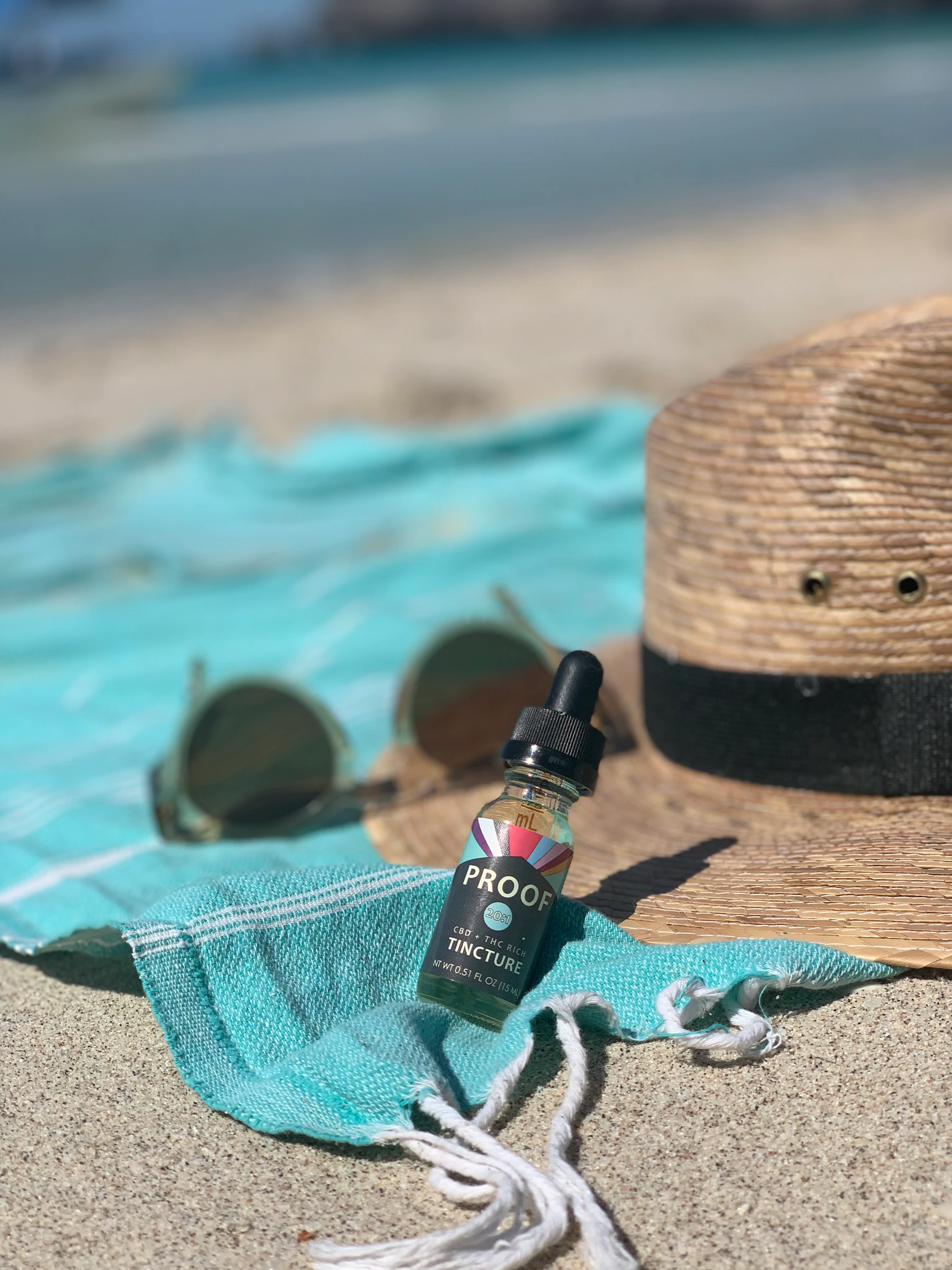
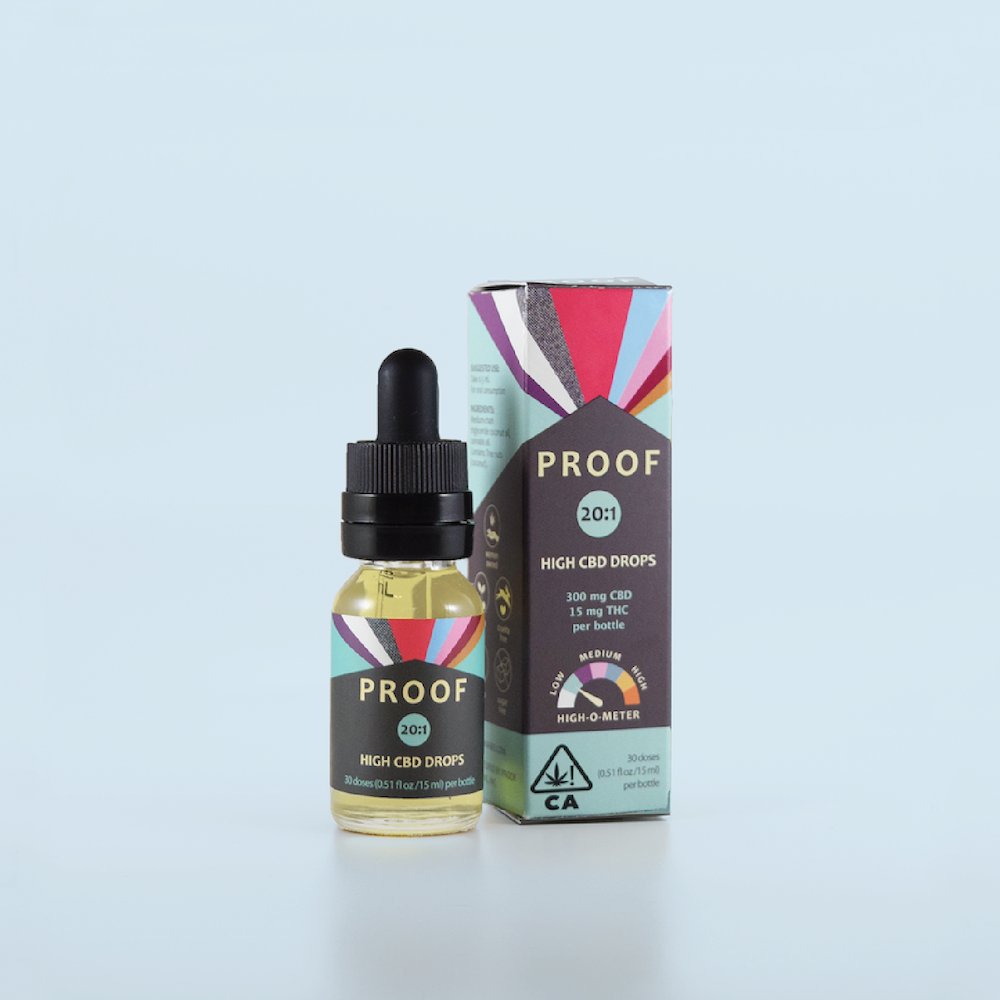
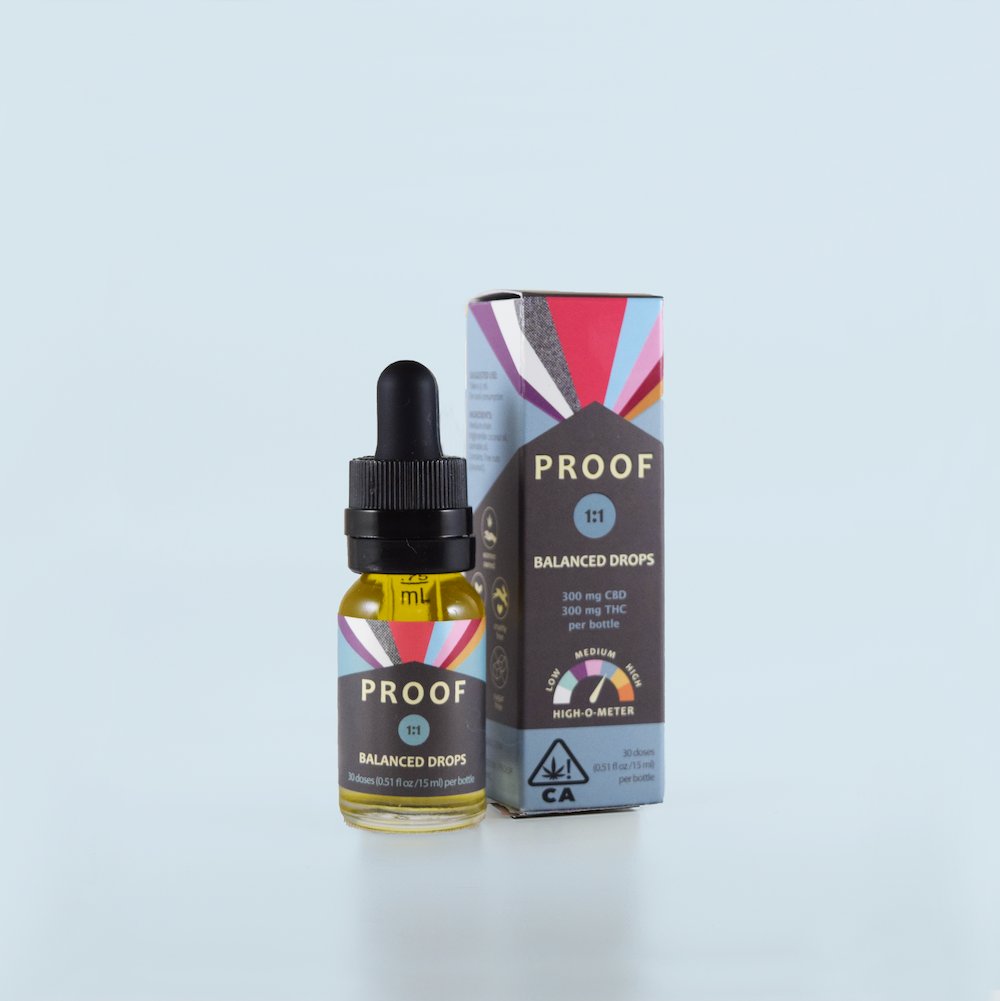
The balance of CBD to THC in a product. A 20:1 ratio has 20 parts CBD for every 1 part THC; a 1:1 ratio has equal amounts. Proof's 20:1 High CBD Drops have 10 mg CBD + 0.5 mg THC per half dropper. See the CBD:THC Ratio Guide.
RSO (Rick Simpson Oil)
A thick, dark, unrefined whole-plant cannabis extract, also called FSO or FECO. Proof's Full Spectrum Oil (RSO) is ethanol-extracted, comes with a calibrated 1 gram applicator, and varies in potency by batch, so always read the front label. Read What Is RSO?
S
Serving size vs per package
"Per serving" is the amount in one dose; "per package" is the total in the whole container. A bottle of Proof 20:1 High CBD Drops has 15 mg THC in total but just 0.5 mg in each half-dropper serving. See how to read a label.
Sublingual
Under the tongue. Holding drops under your tongue for 60–90 seconds lets them absorb through the tissue there, so effects usually begin in 10–20 minutes. See How to Use a THC Tincture.
T
Terpenes
Aromatic compounds that give cannabis, and many other plants like citrus and pine, their scent and flavor. Full spectrum extracts, like Proof's RSO, keep the plant's naturally occurring terpenes.
THC (delta-9-tetrahydrocannabinol)
The main psychoactive cannabinoid in cannabis, responsible for the high. Start with a small amount: we suggest 1–2 mg for first-time users. See How Much THC Should a Beginner Take?
THCA
The raw, non-psychoactive acid form of THC found in the living plant. Heat converts THCA into THC through decarboxylation.
THCV (tetrahydrocannabivarin)
A cannabinoid related to THC but with a shorter chemical structure. In studies at the doses tested, it hasn't produced THC's typical high. Proof's V Drops contain 5 mg THCV + 5 mg CBG + 5 mg THC per serving, so they can be intoxicating. Read What Is THCV?
Tincture
A liquid cannabis extract measured with a dropper. Proof calls its tinctures "drops." They can be taken under the tongue or added to food and drinks. See How to Use a THC Tincture.
Tolerance
How strongly your body responds to a given amount of THC. Tolerance tends to rise with frequent use and fall after a break, and it can differ between ways of taking cannabis. Read Serving Size and Tolerance.
Tolerance break (T-break)
A planned pause from all THC, taken so a smaller dose feels the way it used to. When you restart, begin with a small amount again. Learn more in Serving Size and Tolerance.
Topical
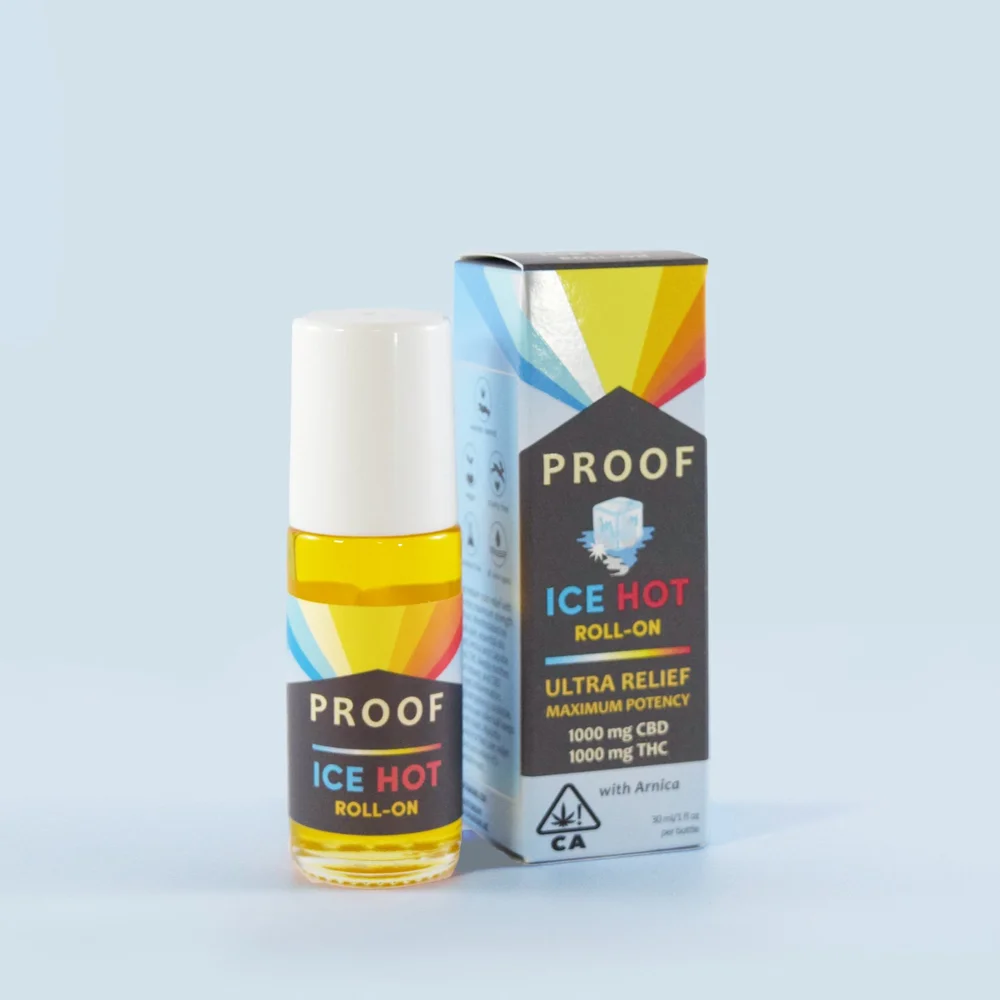
A cannabis product applied to the skin, such as a balm or roll-on. Proof's topicals include the Ice Hot Roll-On, Deep Calm Roll-On and Ice Hot Balm. Read Can You Get High from Topicals?
A note on safety
Whatever the term, the basics stay the same: start low, wait at least 2–3 hours before taking more, never drive after consuming THC, talk to your doctor if you take medications, and keep cannabis locked away from children and pets. If you take too much, read Too Much THC? What to Do.
- New to cannabis
- Glossary
For adults 21+ only. Cannabis affects everyone differently. Product descriptions and anticipated effects are provided for informational purposes only and may vary by individual. Proof products are not intended to diagnose, treat, cure, or prevent any disease or medical condition. Consult a healthcare professional regarding cannabis use and your individual health needs.