On this page
THCV (tetrahydrocannabivarin) is a minor cannabinoid that looks a lot like THC but has a shorter side chain. That small difference changes how it behaves in the body. In small human studies, a 10 mg dose of THCV felt no different from a placebo, and research on its other effects is still early. Most cannabis contains little of it.
What is THCV?
THCV belongs to a family called the "varin" cannabinoids. THC has a side chain of five carbon atoms; THCV has the same ring structure but a side chain of three carbons, known as a propyl chain [1]. The plant builds varin cannabinoids from a different starting molecule (varinolic acid instead of olivetolic acid), which is why THCV shows up separately from THC rather than as a breakdown product of it [1].
THCV-dominant cannabis is rare [1]. Where it does appear, it tends to come from particular plant lineages. A botanical review describes THCV as "commonly present, especially in landraces from South Asia and Africa," and lower in Central Asian (Afghan-type) populations [2]. An earlier chemical survey of 157 cannabis samples found that plants with relatively high THCV were common only in the group the authors classified as C. indica [3]. Decades of cross-breeding have blurred these lines, so a strain name alone won't tell you how much THCV a product contains. The label and lab results will.
Does THCV get you high?
At the doses studied in people so far, mostly not. The answer depends on the dose, and the research is still limited.
- 10 mg of oral THCV: In a small pilot trial, 10 men took 10 mg of THCV or a placebo daily for five days. THCV was well tolerated and "subjectively indistinguishable from placebo" [4]. A separate study of 20 healthy volunteers given a single 10 mg dose also found no differences in subjective ratings compared with placebo [5].
- Higher doses: A 2023 study gave 18 healthy adults a related form, Δ8-THCV, at doses from 12.5 mg to 200 mg. Doses of 12.5 to 50 mg didn't produce the effects typically associated with THC. At 100 and 200 mg, participants reported slight THC-like effects, and "euphoric mood" was the most common side effect, though most side effects were mild [6][1].
- How it acts: In lab research, THCV mainly blocks the CB1 receptor (the receptor THC activates to produce a high) at lower doses, and may weakly activate it at high doses [1]. That's one reason researchers say THCV "is not THC" [1].
Two caveats. First, these were small studies in controlled settings, not real-world use. Second, many THCV products, including ours, also contain THC, which is intoxicating. The THC in a product will shape how it feels far more than the THCV research suggests on its own.
What the research says
THCV has been studied much less than THC or CBD. Here's what human studies actually show, with their limits.
THCV and THC together
The best-known human study is the 2016 pilot trial by Englund and colleagues [4]. Ten male cannabis users took 10 mg of THCV or a placebo for five days, then received a small intravenous dose of THC on day five.
- Under placebo, THC impaired delayed verbal recall; after THCV, it didn't. THCV also blunted THC's increase in heart rate and some ratings of how intense THC felt [4][1].
- But THCV combined with THC also increased memory intrusions (recalling words that weren't on the list) [4].
- The authors cautioned that the findings need to be interpreted carefully because the sample was small and the THC dose produced weaker effects than expected [4]. THC was also given by IV, which is very different from how people actually use cannabis [1].
In other words, it's an interesting signal, not proof that THCV "cancels out" THC.
Attention
In the 2023 Δ8-THCV study, some doses (12.5, 25 and 200 mg) shortened the time it took participants to complete an attention task, but the effect didn't increase with dose. The authors described it as a preliminary signal [6]. It's a single small study funded by a cannabis company, and it tested Δ8-THCV rather than the more common Δ9 form.
Appetite and metabolism: early research only
You may see THCV called "diet weed" online. The research doesn't support weight-loss claims.
- In rodents, THCV has been studied for effects on appetite and energy metabolism [7]. Animal results often don't carry over to people.
- In the 20-person brain-imaging study, a single 10 mg dose of THCV changed brain activity in response to pictures and tastes of chocolate and unpleasant food. It didn't change how pleasant, intense or wanted people rated the foods [5].
- One small 13-week pilot study looked at THCV and metabolic lab markers in adults with type 2 diabetes. THCV didn't change the study's main measure, though some secondary markers moved [8]. It was a pilot, and its findings haven't been confirmed in larger trials.
THCV isn't approved to treat any condition, and no Proof product is intended to diagnose, treat, cure or prevent any disease. Long-term safety and drug interactions haven't been well studied, so if you take any medications, talk to your doctor first.
THCV tinctures and how Proof uses THCV
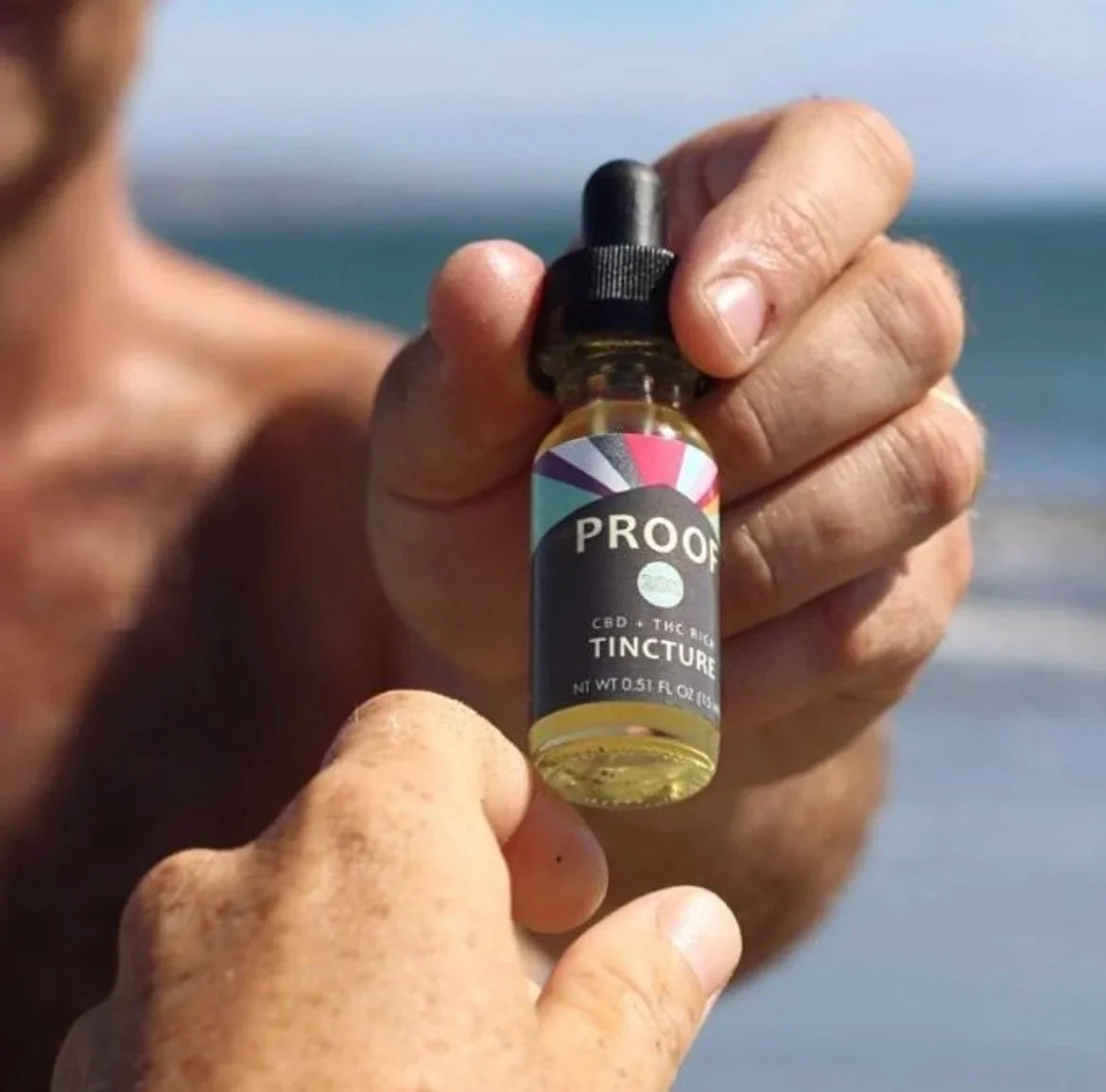
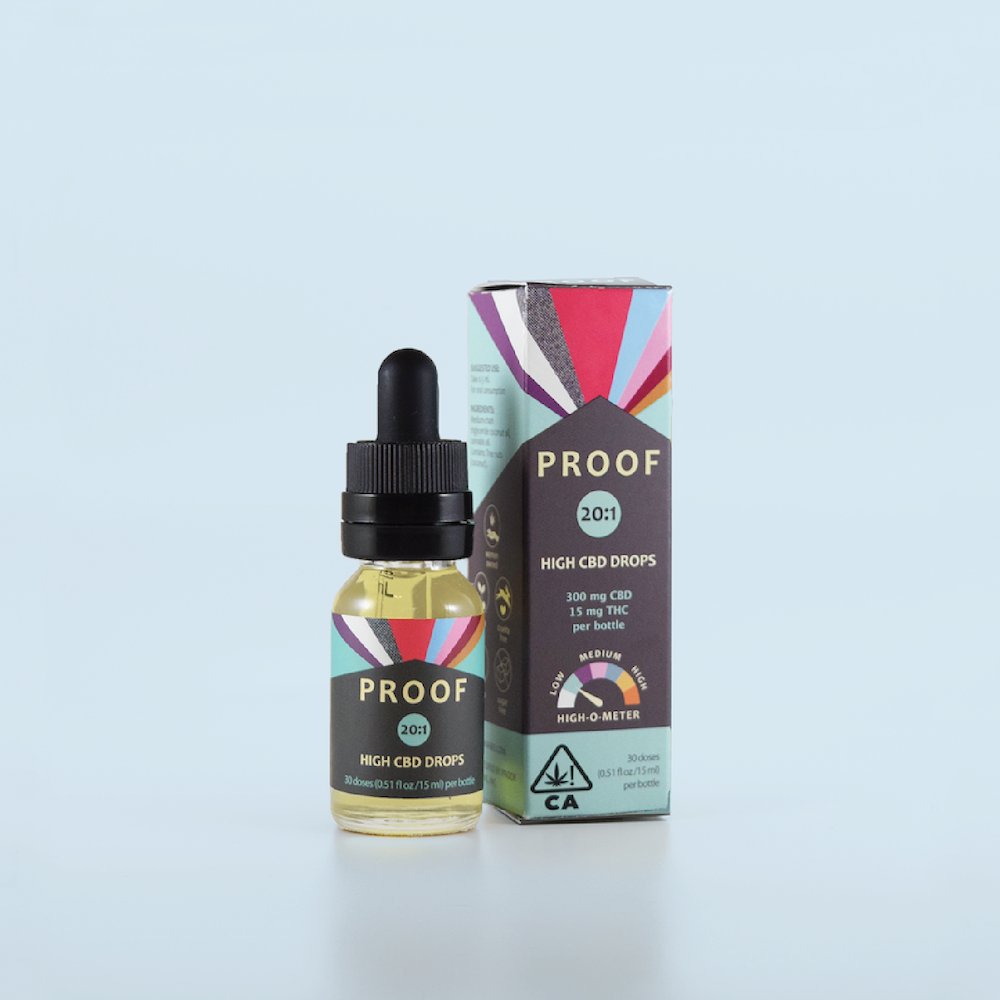
A THCV tincture is a cannabis oil with a measured amount of THCV per serving, taken by dropper. Tinctures make it easy to see exactly how much THCV, and how much THC, you're getting in each dose. That matters with a cannabinoid this new: read the label for both numbers, and buy from licensed sources whose products are lab tested.
Our V Drops (THCV) contain 5 mg THCV + 5 mg CBG + 5 mg THC per dose (150 mg of each per bottle). We designed V Drops as an alert, uplifting blend for exploration, creativity and intimacy, and they sit in our Uplift collection alongside CBG Elixir Drops. That's what we had in mind when we built the formula, not a proven effect of THCV, and everyone responds differently.
Because V Drops contain 5 mg of THC per dose, they can be intoxicating. A few practical points:
- Adults 21+ only. Proof products are sold at licensed California dispensaries. Find Proof near you.
- Start low. If you're new to THC, try less than a full dose first. Our guide to dosing and tolerance can help.
- Know the timing. Held under the tongue, drops usually take effect in 10 to 20 minutes. Mixed into food or a drink, they work like an edible and can take 30 minutes to 2 hours. Wait before taking more.
- Don't drive or operate machinery after using THC products.
- Talk to your doctor if you take medications, or if you're pregnant or breastfeeding.
Frequently asked questions
What does THCV do?
Research is still early. In small human studies, 10 mg of THCV felt no different from a placebo [4][5], and studies of its effects on attention, appetite and metabolism are preliminary [5][6][8]. Proof designed V Drops, which pair THCV with CBG and THC, as an alert, uplifting blend, but that's our intent for the formula, not a proven effect.
Is THCV stronger than THC?
No. At the doses tested in people, THCV hasn't produced THC's typical high [1][4]. Only much higher doses of Δ8-THCV (100 to 200 mg) produced slight THC-like effects in one study [6].
Is THCV legal in California?
Licensed cannabis products containing THCV, like V Drops, are legal for adults 21 and older at licensed California dispensaries [9].
Will THCV show up on a drug test?
It can. In the 2023 study, 78 of 79 urine screens taken 8 hours after a dose of Δ8-THCV tested positive for THC [6]. Products that also contain THC, like V Drops, are even more likely to show up.
Is THCV a weight-loss product?
No. Some early animal and small human studies have looked at THCV and appetite or metabolism [5][7][8], but there's no good evidence that it helps people lose weight.
What's the difference between THCV and THC?
THCV has a three-carbon side chain instead of five, mainly blocks the CB1 receptor at lower doses, and hasn't produced a high at typical oral doses in studies [1]. THC activates CB1 and is intoxicating.
Sources
- Haghdoost M, Peters EN, Roberts M, Bonn-Miller MO. Tetrahydrocannabivarin is Not Tetrahydrocannabinol. Cannabis and Cannabinoid Research, 2025.
- McPartland JM, Small E. A classification of endangered high-THC cannabis (Cannabis sativa subsp. indica) domesticates and their wild relatives. PhytoKeys, 2020.
- Hillig KW, Mahlberg PG. A chemotaxonomic analysis of cannabinoid variation in Cannabis (Cannabaceae). American Journal of Botany, 2004.
- Englund A, Atakan Z, Kralj A, et al. The effect of five day dosing with THCV on THC-induced cognitive, psychological and physiological effects in healthy male human volunteers: a placebo-controlled, double-blind, crossover pilot trial. Journal of Psychopharmacology, 2016.
- Tudge L, Williams C, Cowen PJ, McCabe C. Neural effects of cannabinoid CB1 neutral antagonist tetrahydrocannabivarin on food reward and aversion in healthy volunteers. International Journal of Neuropsychopharmacology, 2015.
- Peters EN, MacNair L, Harrison A, et al. A two-phase, dose-ranging, placebo-controlled study of the safety and preliminary test of acute effects of oral Δ8-tetrahydrocannabivarin in healthy participants. Cannabis and Cannabinoid Research, 2023.
- Abioye A, Ayodele O, Marinkovic A, et al. Δ9-Tetrahydrocannabivarin (THCV): a commentary on potential therapeutic benefit for the management of obesity and diabetes. Journal of Cannabis Research, 2020.
- Jadoon KA, Ratcliffe SH, Barrett DA, et al. Efficacy and safety of cannabidiol and tetrahydrocannabivarin on glycemic and lipid parameters in patients with type 2 diabetes. Diabetes Care, 2016.
- California Department of Cannabis Control. What's legal.
- THCV
- Cannabinoids
For adults 21+ only. Cannabis affects everyone differently. Product descriptions and anticipated effects are provided for informational purposes only and may vary by individual. Proof products are not intended to diagnose, treat, cure, or prevent any disease or medical condition. Consult a healthcare professional regarding cannabis use and your individual health needs.