On this page
Microdosing THC means taking a small, measured amount of THC, often somewhere around 1 to 2.5 mg, with the goal of feeling a subtle effect rather than a strong high. There's no official definition. The practical version: choose a low-THC product, measure each dose, wait long enough to feel it, and adjust slowly.
What does microdosing THC mean?
In general, microdosing means taking a much smaller amount of a substance than a typical dose. Researchers behind a 2026 national survey described it as roughly one-fifth to one-twentieth of a typical recreational dose, taken to avoid strong psychoactive effects [1].
For THC, there's no agreed-upon number. Many people use "microdose" for amounts around 1 to 2.5 mg of THC. For comparison, California caps edibles at 10 mg of THC per serving [2], so a microdose is a fraction of a standard edible serving.
What counts as "low" also depends on the person. Body chemistry, experience with cannabis and tolerance all change how a given amount feels. One milligram might be barely noticeable to a regular consumer and clearly noticeable to someone new to THC.
Why people microdose
Microdosing is common. In that 2026 survey of 1,525 U.S. adults, about 9.4% said they had microdosed cannabis at least once, making it the most commonly microdosed substance in the survey, ahead of psilocybin and LSD [1]. People reported both medical and recreational reasons [1].
People who microdose often describe wanting:
- A gentle effect they can fit into a normal day
- More control over how they feel than a full dose allows
- A way to try THC with less risk of feeling too high
- A small amount of THC alongside a larger amount of CBD
These are reasons people give, not promised results. Everyone responds differently, and research on low-dose THC is still limited.
How to start microdosing THC
1. Pick a CBD-rich ratio
Products that pair a little THC with much more CBD make it easier to keep the THC low. A 20:1 or 10:1 ratio gives you a small, measured amount of THC in each dose.
2. Measure with a calibrated dropper
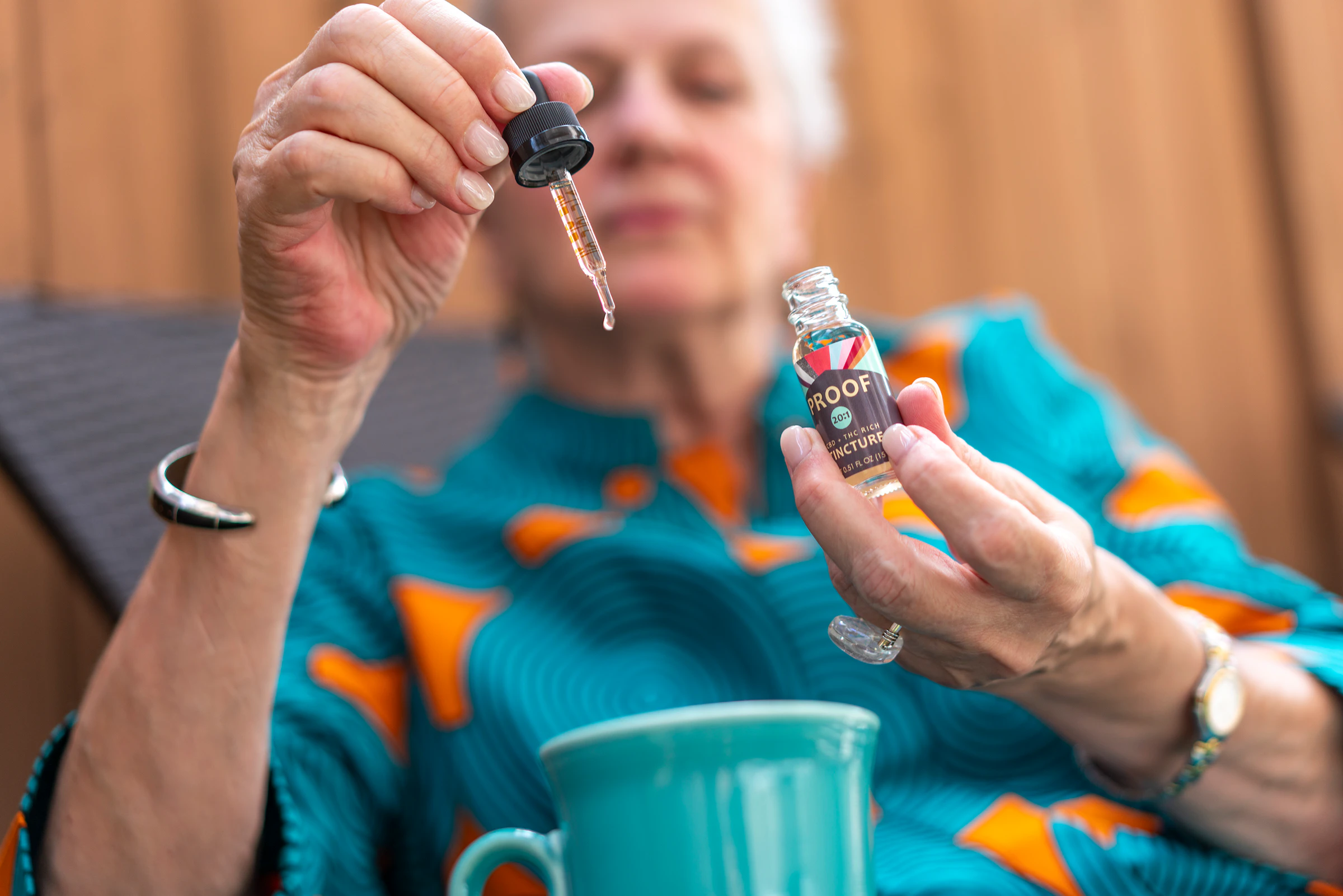
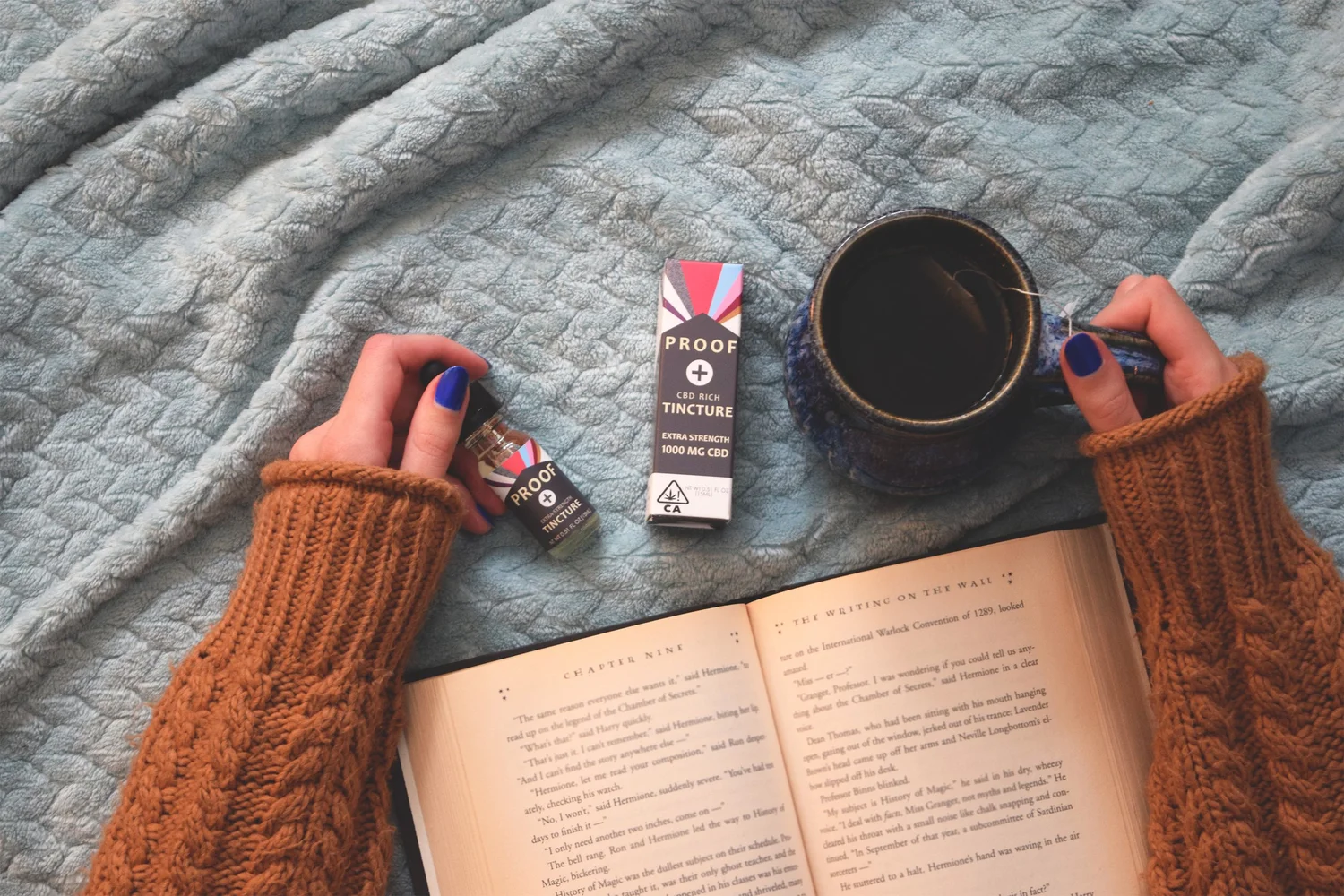
Tinctures make microdosing more precise than eyeballing a brownie. Use the dropper that comes with the product and check the label for how much THC is in each marked amount. With most Proof drops, a dose is 0.5 ml, or half a dropper. To take less, use a smaller amount on the same dropper.
3. Choose how you take it
- Under the tongue: Hold the drops under your tongue for a moment before swallowing. Effects usually begin in 10 to 20 minutes.
- In food or a drink: Drops work like an edible this way and can take 30 minutes to 2 hours to kick in. The California Department of Cannabis Control notes that edibles can take up to two hours to begin working and up to four hours for full effects [3].
4. Wait before taking more
Give it 2 to 3 hours before you decide whether to take more, especially if you took it with food. Taking a second dose too soon is the most common way to end up with more THC than you wanted. Start low, go slow [3].
5. Keep a simple log
Write down the date, time, product, amount, how you took it and how you felt an hour or two later. After a week or two, you'll have a clearer picture of what amount works for you than memory alone gives you.
Microdosing with Proof
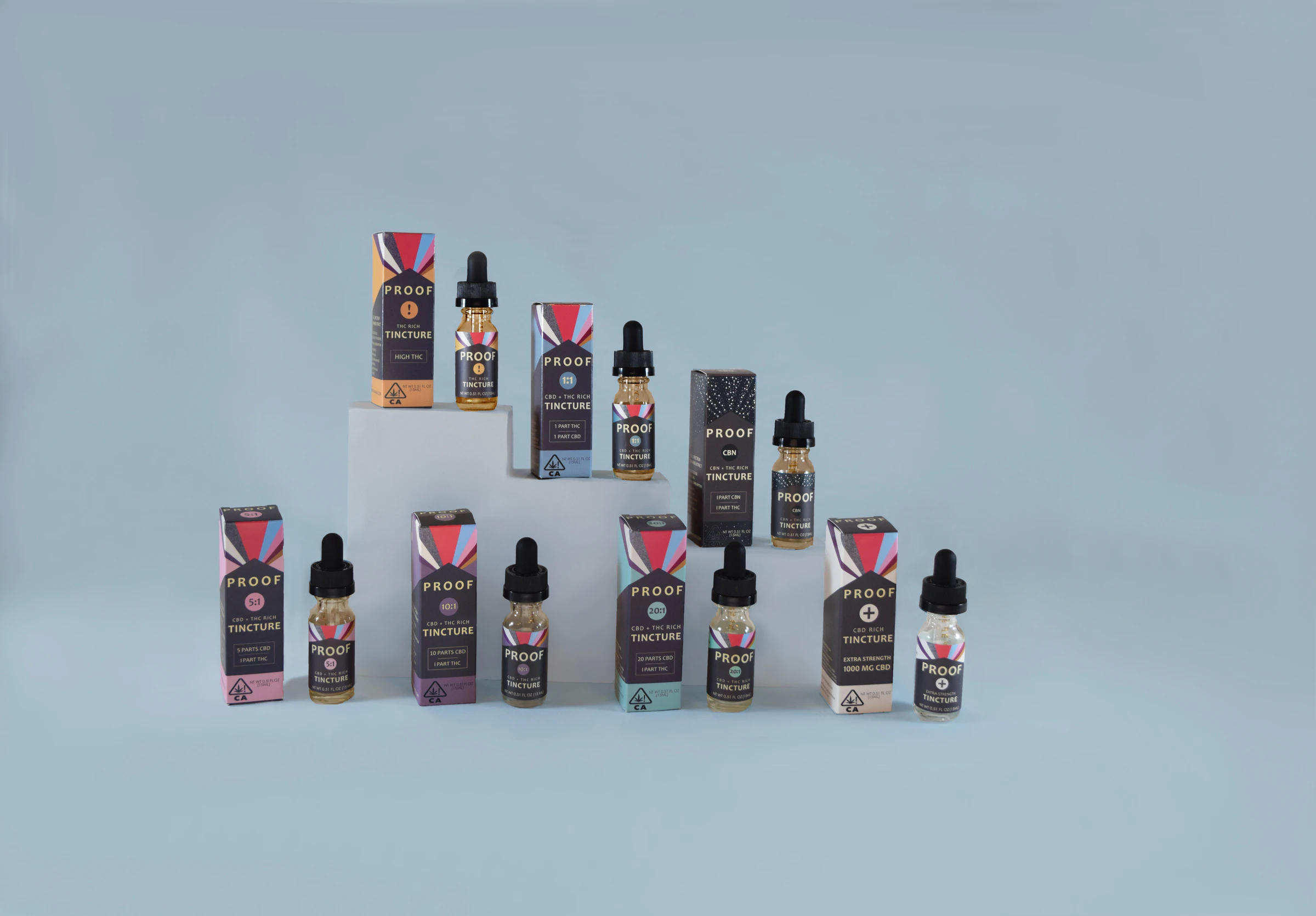
Proof has been making cannabinoid ratios in Santa Rosa since 2016. Here are our drops sorted by THC per serving:
| Product | THC per serving | Full dose |
|---|---|---|
| 20:1 High CBD Drops | 0.5 mg | 10 mg CBD + 0.5 mg THC (0.5 ml, half dropper) |
| 10:1 Perfect Microdose Drops | 1 mg | 10 mg CBD + 1 mg THC (0.5 ml, half dropper) |
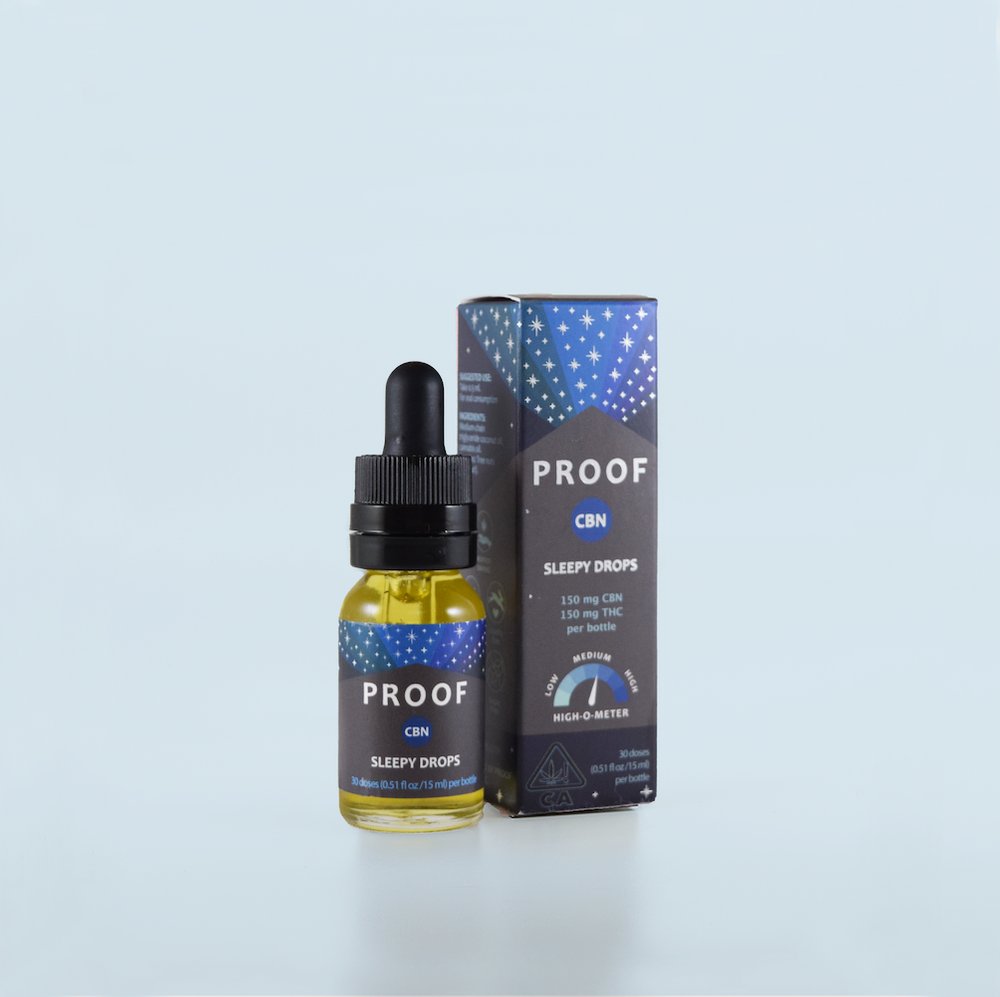
| CBN Sleepy Drops | 5 mg | 5 mg CBN + 5 mg THC (0.5 ml, half dropper) |
| CBG Elixir Drops | 5 mg | 5 mg CBG + 5 mg CBD + 5 mg THC (0.5 ml, half dropper) |
| V Drops (THCV) | 5 mg | 5 mg THCV + 5 mg CBG + 5 mg THC |
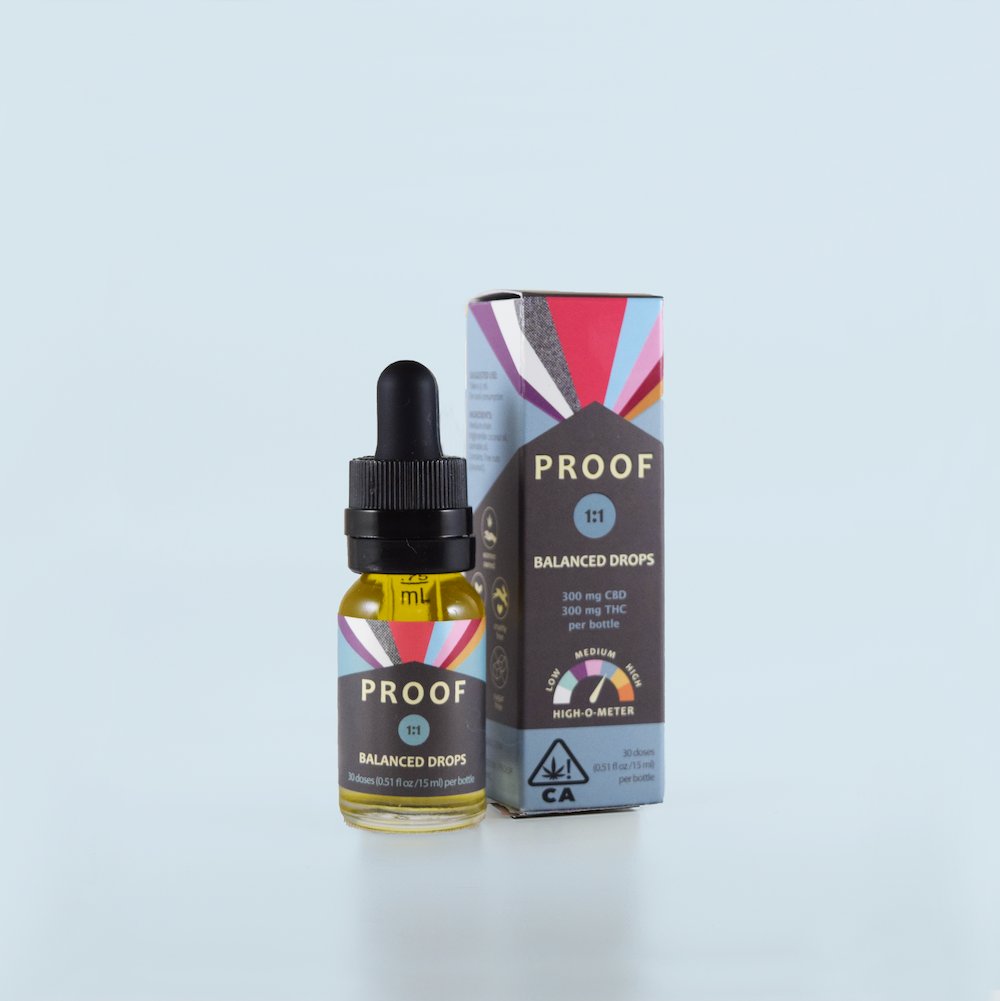
| 1:1 Balanced Drops | 10 mg | 10 mg CBD + 10 mg THC (0.5 ml, half dropper) |
Our 10:1 Perfect Microdose Drops are built for exactly this. Each half-dropper dose pairs 1 mg of THC with 10 mg of CBD. We made them for people with a lower THC tolerance, and for people with a higher tolerance who want to microdose through the day. You can take them under the tongue or add them to food or a drink.
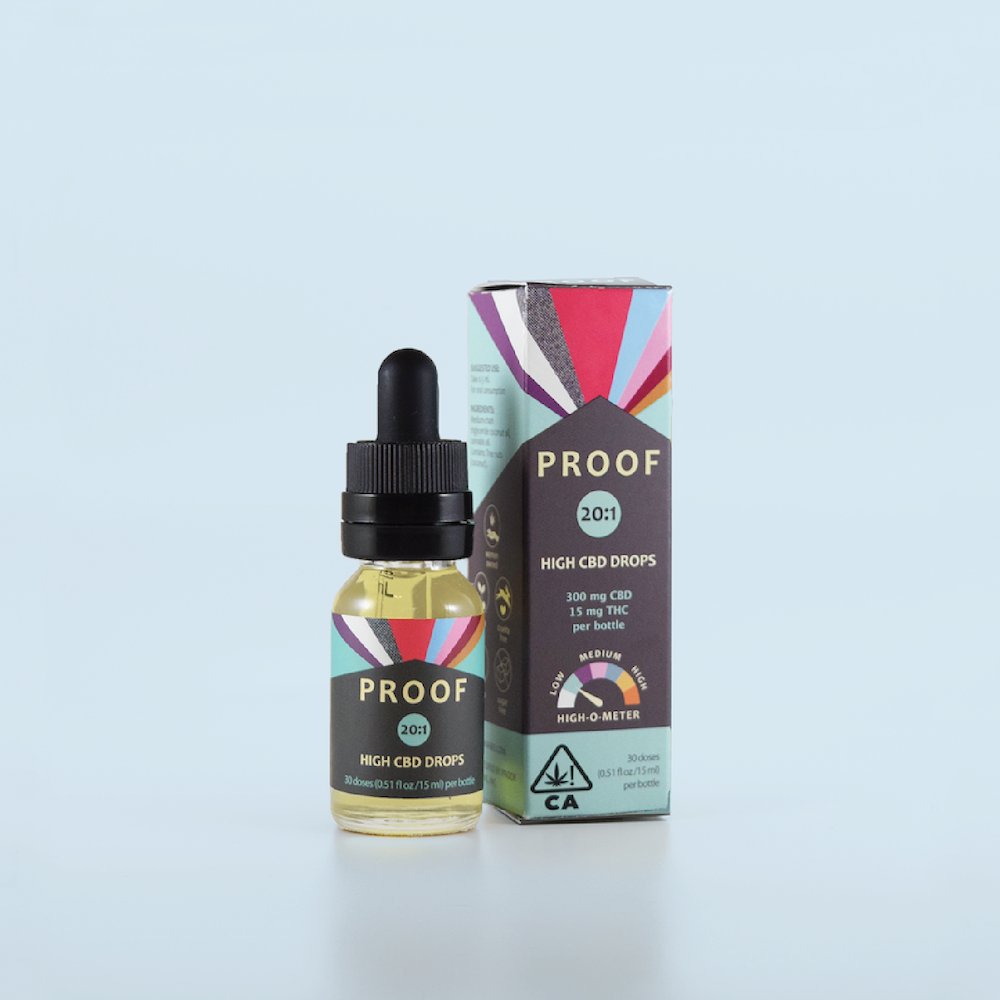
Our 20:1 High CBD Drops go even lower, with 0.5 mg of THC and 10 mg of CBD per dose. We designed them for daytime and continuous use.
The 5 mg and 10 mg formulas aren't microdoses at a full serving, but a smaller amount on the dropper means less THC. Check the label and do the math before you adjust.
Proof products are sold at licensed California dispensaries to adults 21 and older. Find Proof near you.
What research says about low-dose THC
Studies specifically on "microdosing" THC are scarce. The most relevant research compares low and higher doses.
Low vs. higher doses and stress. In a 2017 study, 42 healthy adults took a placebo, 7.5 mg of oral THC or 12.5 mg of oral THC before a stressful speaking and mental-arithmetic task [4]. Compared with placebo, 7.5 mg reduced how distressed people said they felt after the task. The 12.5 mg dose did the opposite: it increased negative mood overall and impaired performance on the task [4]. The authors concluded that a low dose produced subjective stress-relieving effects, while higher doses may increase negative mood [4].
That study had real limits. It was small, with 13 to 15 people per group, it was done in a lab, and it involved a single dose. Its "low" dose of 7.5 mg is also well above what most people call a microdose. Still, it's a useful example of a broader pattern: more THC isn't always better, and the same compound can feel quite different at different doses.
What we don't know. There's little research on doses of 1 to 2.5 mg, on taking small doses daily, or on how CBD-rich ratios compare with THC alone at these levels. We don't make health claims about microdosing, and no Proof product is intended to diagnose, treat, cure or prevent any disease.
Safety basics
- Adults 21+ only. Keep cannabis products away from children and pets.
- Don't drive. Even small amounts of THC can affect you, and driving under the influence of cannabis is illegal in California [3].
- Talk to your doctor if you take medications. CBD has been associated with interactions with other drugs [5], and CBD-rich drops contain more CBD than THC. Don't use cannabis if you're pregnant or breastfeeding [3].
- Labels matter. Buy from licensed sources whose products are lab tested so the amount on the label is the amount in the bottle.
For more, read our guide to dosing and tolerance.
Frequently asked questions
How much THC is a microdose?
There's no official number. Many people use the term for roughly 1 to 2.5 mg of THC. Our 10:1 drops contain 1 mg of THC per half-dropper dose, and our 20:1 drops contain 0.5 mg.
Will a THC microdose get me high?
It might, a little. The goal is a subtle effect, but people respond differently, especially if they're new to THC. Start with the smallest amount and wait to see how you feel before taking more.
How long does a microdose take to work?
Under the tongue, drops usually take effect in 10 to 20 minutes. In food or a drink, expect 30 minutes to 2 hours, and full effects can take longer [3]. Wait 2 to 3 hours before taking more.
Is it better to microdose with CBD and THC together?
Many people prefer CBD-rich ratios because they make it easy to keep THC low, but research comparing combinations with THC alone at microdose levels is limited. It comes down to personal preference and how you respond.
Can I microdose THC every day?
Some people do, but there's little research on daily low-dose use. If you plan to use cannabis regularly, talk to your doctor, especially if you take medications.
Will microdosing show up on a drug test?
It can. Drug tests look for THC, and even small amounts taken regularly may be detected. If testing is a concern, choose a product with no THC.
Sources
- University of California San Diego. Cannabis microdosing more common than psychedelics among U.S. adults, national survey finds, 2026. Reporting on Yang K, Leas E, et al., "Prevalence and Reasons for Microdosing Cannabis, Psilocybin, LSD, and MDMA Among US Adults," American Journal of Preventive Medicine, 2026.
- California Department of Cannabis Control. Text of Regulations (Title 4, §17304).
- California Department of Cannabis Control. Responsible cannabis use.
- Childs E, Lutz JA, de Wit H. Dose-related effects of delta-9-THC on emotional responses to acute psychosocial stress. Drug and Alcohol Dependence, 2017.
- National Center for Complementary and Integrative Health (NIH). Cannabis (Marijuana) and Cannabinoids: What You Need To Know.
- THC
- Dosing
For adults 21+ only. Cannabis affects everyone differently. Product descriptions and anticipated effects are provided for informational purposes only and may vary by individual. Proof products are not intended to diagnose, treat, cure, or prevent any disease or medical condition. Consult a healthcare professional regarding cannabis use and your individual health needs.