On this page
CBG (cannabigerol) and CBD (cannabidiol) are both non-intoxicating cannabinoids from the cannabis plant. The main difference: CBG is the precursor the plant makes first, and it usually appears in small amounts, while CBD is one of the plant's most abundant cannabinoids and has been studied far more, including in an FDA-approved prescription drug.
CBG vs CBD at a glance
| CBG (cannabigerol) | CBD (cannabidiol) | |
|---|---|---|
| Origin in the plant | Made first, as CBGA, the precursor to THCA, CBDA and CBCA [1] | Made from CBGA, as CBDA, which becomes CBD with heat [1] |
| Psychoactive? | Non-intoxicating; no impairment seen in a placebo-controlled trial [2] | Non-intoxicating [3]; can cause drowsiness in some people [4] |
| How common | A "minor" cannabinoid, usually present in small amounts; some hemp varieties are bred to keep more [5][6] | One of the two main cannabinoids in cannabis, alongside THC [7] |
| What research has looked at | Mostly lab and animal studies; one small human trial (stress and anxiety ratings) and one survey [2][5][8] | Far more research, including clinical trials behind Epidiolex, an FDA-approved prescription drug for seizures tied to three rare conditions [4] |
| Legal status | Can come from hemp or cannabis; licensed cannabis CBG products are sold to adults 21+ in California [9] | Can come from hemp or cannabis; California treats CBD as non-intoxicating, with separate rules for hemp products [3] |
What is CBG?
CBG is often called the "mother of cannabinoids." Cannabis plants make CBGA (cannabigerolic acid) first, then enzymes turn most of it into THCA, CBDA and CBCA, the acid forms of THC, CBD and CBC [1]. Whatever CBGA is left over becomes CBG once it's heated.
Because most of it gets converted, CBG is usually a minor cannabinoid. Some hemp plants carry a gene variant that barely converts CBGA, which is how CBG-dominant hemp exists [6]. For the full story, read What Is CBG? The Mother Cannabinoid Explained.
What is CBD?
CBD is one of the two main cannabinoids in cannabis, along with THC [7]. It doesn't produce a high, and it's found in both hemp and cannabis. CBD has been studied far more than CBG and most other minor cannabinoids [8][14], and it's the active ingredient in Epidiolex, an FDA-approved prescription drug for seizures associated with Lennox-Gastaut syndrome, Dravet syndrome and tuberous sclerosis complex [4]. That approval covers that specific prescription drug, not over-the-counter CBD products. More in our guide, What is CBD?
How CBG and CBD work differently
Both interact with the body's endocannabinoid system, but not in the same way. In cell studies, CBG acted as a partial activator of the CB2 receptor, with a measurable but less clear effect at CB1, the receptor THC activates to produce its high [10]. A pharmacology review describes CBG's activity at cannabinoid receptors as somewhere between THC and CBD, and notes that CBG also interacts with alpha-2 adrenergic and serotonin 5-HT1A receptors [8].
What these differences mean for how each one feels is still an open question. Researchers haven't run head-to-head human studies comparing CBG and CBD.
What research says about each
CBG research
CBG research is young. A 2021 review noted that, "unlike CBD," little research has been done on CBG, even as many claims are made about it [8].
- Lab and animal studies have looked at CBG and inflammation, nerve cells and receptor activity. These are early findings in cells and mice, and they don't show that CBG treats any condition in people [8][10].
- The first placebo-controlled human trial gave 34 healthy adults a single 20 mg dose of hemp-derived CBG. Compared with placebo, CBG reduced self-reported anxiety and stress and improved a verbal memory test, with no impairment [2]. It was small and short, and the participants were experienced cannabis users.
- A survey of 127 adults who used CBG-dominant cannabis found most rated it highly [5]. Surveys rely on self-reporting and have no control group, so they can't prove an effect.
CBD research
CBD has a much deeper research record. Its strongest evidence is the clinical trial data that led to FDA approval of Epidiolex for specific seizure conditions [4]. For other uses, the evidence is more limited, and the FDA has noted that over-the-counter CBD products haven't gone through its review for safety and effectiveness [4]. The NIH also notes that CBD products may contain more or less CBD than their labels say [7], which is one reason lab testing matters.
Safety and side effects
Neither cannabinoid causes a high, but "non-intoxicating" doesn't mean "no effects."
- CBD: The FDA lists possible side effects including drowsiness, gastrointestinal upset and mood changes such as irritability, and notes that CBD can cause liver injury, a risk it identified while reviewing Epidiolex [4]. A review of CBD's prescribing information found it affects liver enzymes (such as CYP3A4 and CYP2C19) that process many common medications, so the potential for drug interactions is high [11].
- CBG: A single 20 mg dose was well tolerated in the 2024 trial [2]. In the 2022 survey, the side effects respondents mentioned most were dry mouth, sleepiness, increased appetite and dry eyes [5]. Long-term safety and drug interactions haven't been well studied [8].
If you take any prescription medications, talk to your doctor before trying CBD or CBG. The same goes if you're pregnant or breastfeeding.
Can you take CBG and CBD together?
Yes, many products combine them, including ours. Taking them together is common, and there's some early scientific interest in the pairing: one cell-culture study found that CBG and CBD together reduced markers of inflammation in lab-grown cells [12]. That's a lab finding, not evidence of an effect in people. No human trials have compared CBG and CBD together against either one alone.
Many people find that cannabinoid blends feel different from a single cannabinoid, an idea often called the "entourage effect." It's still being studied, and everyone's response is different. The practical advice is the same as for any cannabis product: start low, go slow, and pay attention to how you feel. Our guide to dosing and tolerance can help.
How to choose between CBG and CBD
There's no single right answer, and no product can promise a specific result. A few things to consider:
- Want something with no THC at all? Look for a CBD-only product. CBG and CBD products from licensed cannabis brands often include THC.
- Taking medications? Talk to your doctor first, especially about CBD [4][11].
- Check the label for the amount of each cannabinoid per dose, and buy from licensed sources whose products are tested.
How Proof uses CBG and CBD
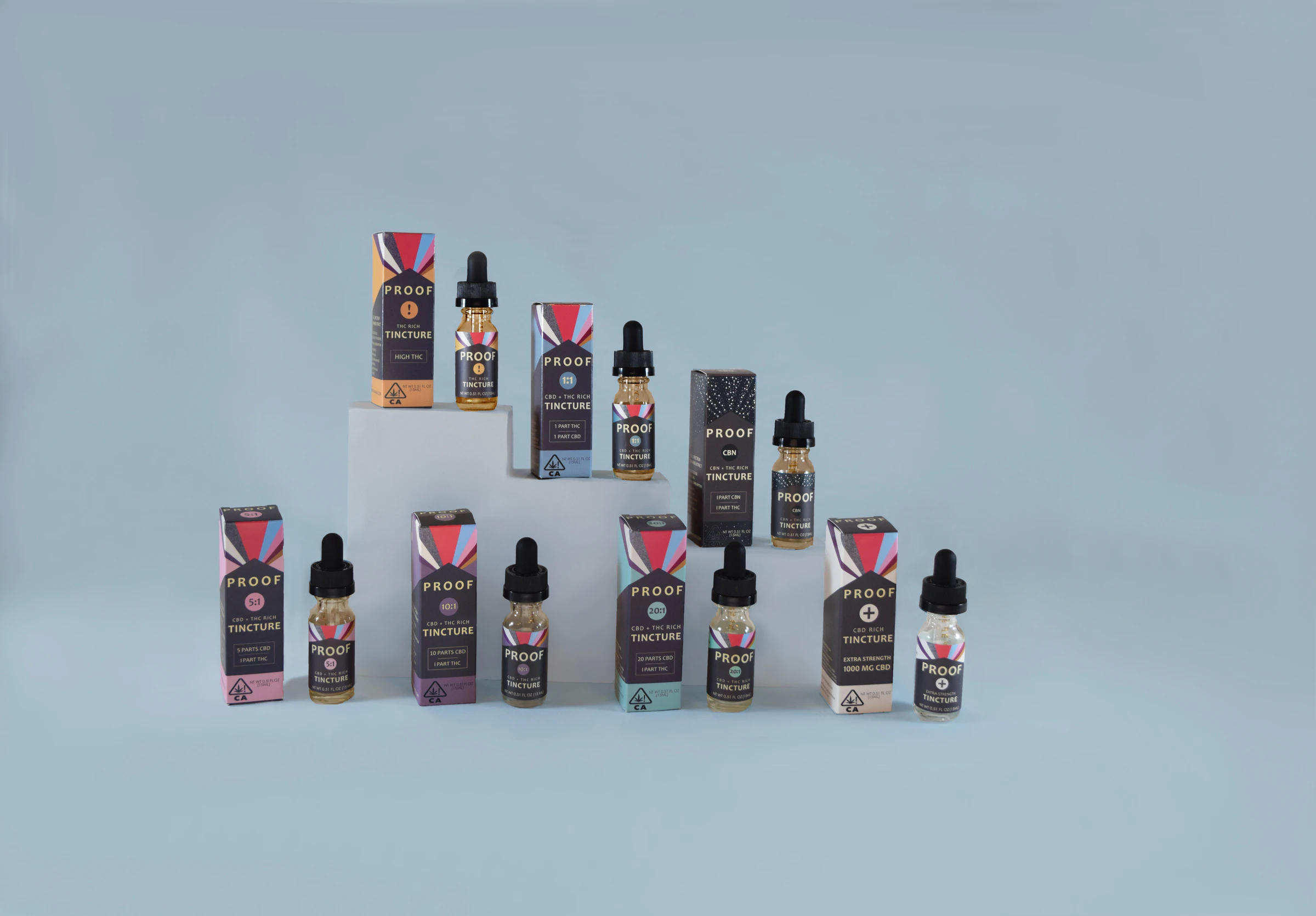
Proof has been making cannabinoid ratios in Santa Rosa since 2016. Here's where CBG and CBD show up in our drops:
- CBG Elixir Drops: 5 mg CBG + 5 mg CBD + 5 mg THC per dose (0.5 ml, half dropper). We designed it for daytime, for people looking for energy and focus.
- V Drops (THCV): 5 mg THCV + 5 mg CBG + 5 mg THC per dose, another daytime formula from our Uplift collection.
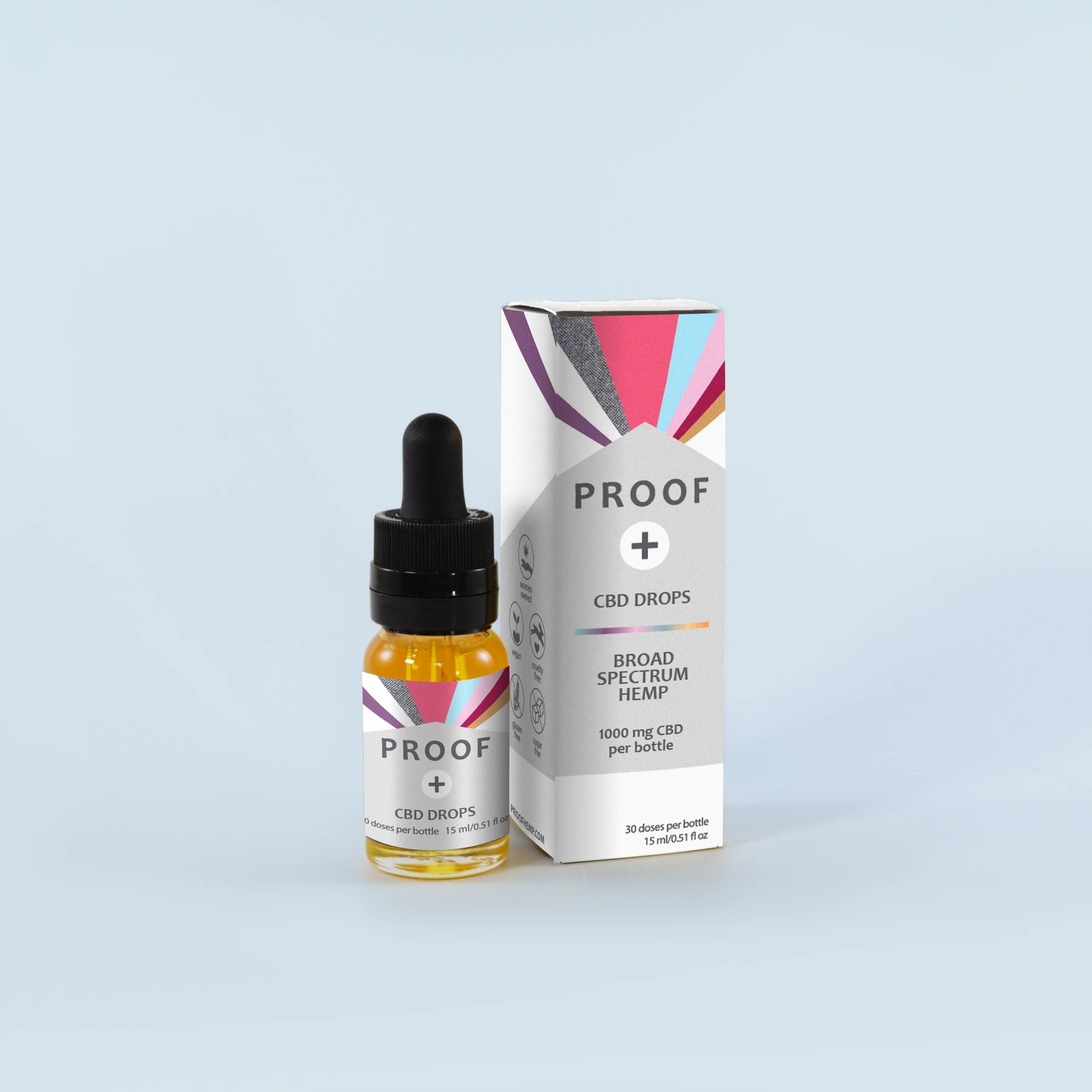
- CBD Only Drops: 33 mg CBD per dose, with no THC. Not psychoactive.
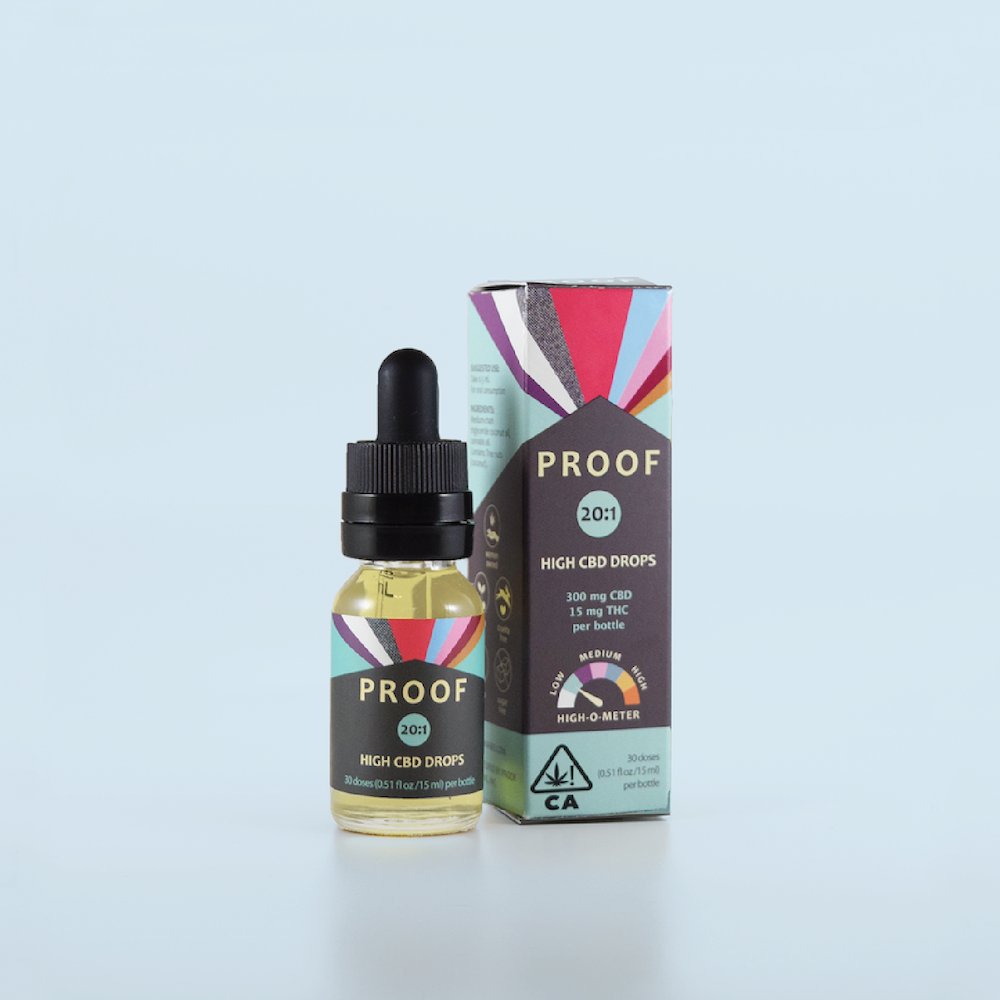
- 20:1 High CBD Drops: 10 mg CBD + 0.5 mg THC per dose, mostly CBD with a small amount of THC.
The energy and focus positioning describes what we had in mind when we built the formulas, not a proven effect. Every product above except CBD Only Drops contains THC, which can be intoxicating. Proof products are sold at licensed California dispensaries to adults 21 and older. Find Proof near you.
Frequently asked questions
Is CBG stronger than CBD?
Not in any simple sense. Neither is intoxicating, and there are no head-to-head human studies comparing them. They act on the body in somewhat different ways [8][10], and people's responses vary.
Does CBG get you high?
No. In a placebo-controlled trial, a 20 mg dose of CBG produced no subjective drug effects or impairment [2]. Products that pair CBG with THC can be intoxicating because of the THC.
Is CBG better than CBD for focus or energy?
There isn't enough research to say. Proof designed CBG Elixir Drops and V Drops for daytime energy and focus, but that's our intent for those formulas, not a proven effect of CBG.
Can CBD interact with medications?
Yes. CBD affects liver enzymes that process many common drugs, and the FDA warns it can change how other medicines work [4][11]. Talk to your doctor before using CBD if you take any medications. Less is known about CBG's interactions [8].
Is CBG legal in California?
Licensed cannabis products containing CBG, like Proof's, are legal for adults 21 and older at licensed California dispensaries [9]. Hemp-derived products follow separate rules. California's AB 8 moved oversight of most hemp products under the state's cannabis framework [3], and a change to the federal definition of hemp took effect on November 12, 2026 [13]. Rules are still evolving, so check current regulations.
Will CBG or CBD show up on a drug test?
Drug tests generally look for THC. But many CBG and CBD products contain some THC, which can be detected. If testing is a concern, choose a product with no THC.
Sources
- Tahir MN, Raz FS, Rondeau-Gagné S, Trant JF. The biosynthesis of the cannabinoids. Journal of Cannabis Research, 2021.
- Cuttler C, Stueber A, Cooper ZD, Russo E. Acute effects of cannabigerol on anxiety, stress, and mood: a double-blind, placebo-controlled, crossover, field trial. Scientific Reports, 2024.
- California Department of Cannabis Control. Hemp.
- U.S. Food and Drug Administration. What You Need to Know (And What We're Working to Find Out) About Products Containing Cannabis or Cannabis-derived Compounds, Including CBD.
- Russo EB, Cuttler C, Cooper ZD, et al. Survey of Patients Employing Cannabigerol-Predominant Cannabis Preparations. Cannabis and Cannabinoid Research, 2022.
- de Meijer EPM, Hammond KM. The inheritance of chemical phenotype in Cannabis sativa L. (II): Cannabigerol predominant plants. Euphytica, 2005.
- National Center for Complementary and Integrative Health (NIH). Cannabis (Marijuana) and Cannabinoids: What You Need To Know.
- Nachnani R, Raup-Konsavage WM, Vrana KE. The Pharmacological Case for Cannabigerol. Journal of Pharmacology and Experimental Therapeutics, 2021.
- California Department of Cannabis Control. What's legal.
- Navarro G, et al. Cannabigerol Action at Cannabinoid CB1 and CB2 Receptors and at CB1–CB2 Heteroreceptor Complexes. Frontiers in Pharmacology, 2018.
- Brown JD, Winterstein AG. Potential Adverse Drug Events and Drug-Drug Interactions with Medical and Consumer Cannabidiol (CBD) Use. Journal of Clinical Medicine, 2019.
- Mammana S, et al. Could the Combination of Two Non-Psychotropic Cannabinoids Counteract Neuroinflammation? Effectiveness of Cannabidiol Associated with Cannabigerol. Medicina, 2019.
- Congressional Research Service. Change to Federal Definition of Hemp and Implications for Federal Enforcement.
- Zagzoog A, et al. In vitro and in vivo pharmacological activity of minor cannabinoids isolated from Cannabis sativa. Scientific Reports, 2020.
- CBG
- CBD
For adults 21+ only. Cannabis affects everyone differently. Product descriptions and anticipated effects are provided for informational purposes only and may vary by individual. Proof products are not intended to diagnose, treat, cure, or prevent any disease or medical condition. Consult a healthcare professional regarding cannabis use and your individual health needs.