On this page
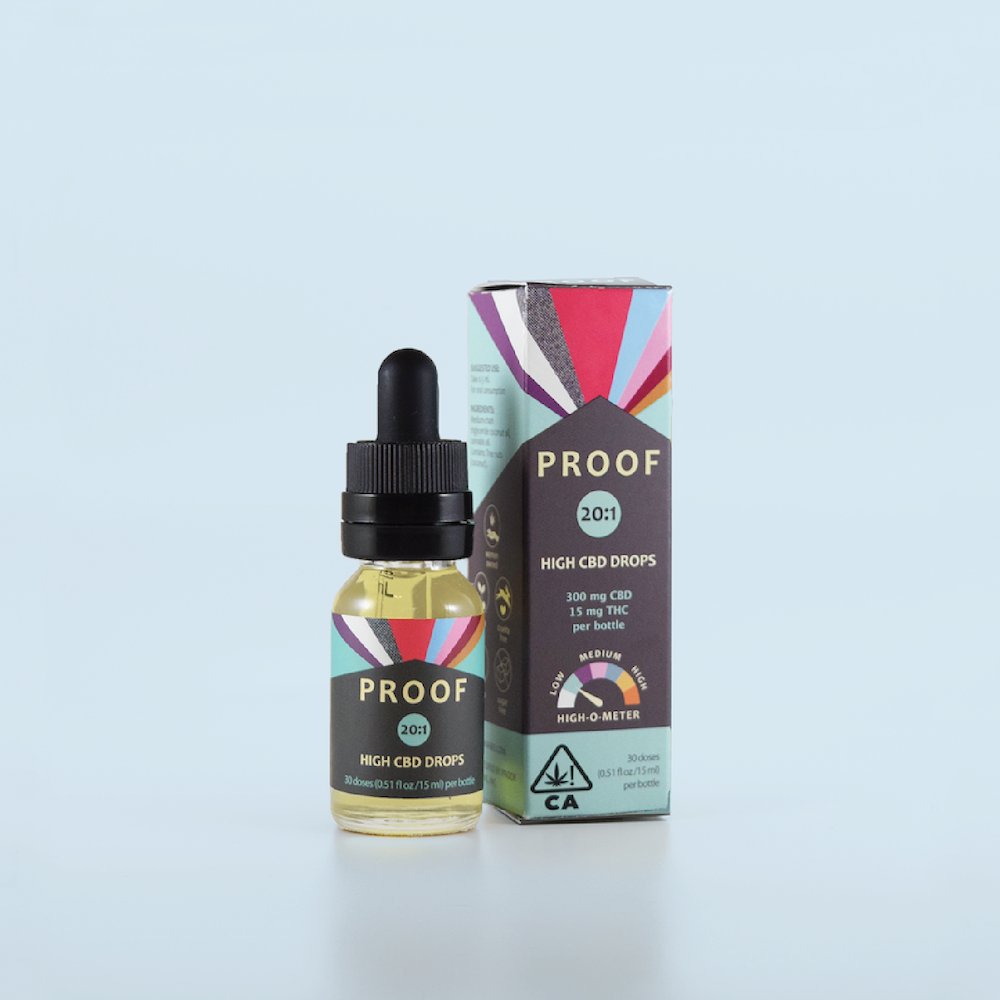
Quick answer: Most beginners do well starting with about 1–2 mg of THC, and public health guidance for edibles suggests 2.5 mg or less.[1] A CBD-rich ratio, like Proof's 20:1 (0.5 mg THC per half dropper) or 10:1 (1 mg THC per half dropper), makes a small first dose easy. Wait at least 2–3 hours before taking more.
Your first experience with THC sets the tone for everything after it. The good news is that a careful first dose is easy to plan, especially with products that list exactly how many milligrams are in each serving.
This guide is part of our New to Cannabis series. It's general information, not medical advice. Proof products are for adults 21 and over.
Common beginner amounts
There's no single "right" first dose, because people respond to THC very differently. But a few reference points are useful:
- 1–2 mg of THC. This is where we suggest most first-time users start, as we explain in our Serving Size and Tolerance guide. It's a small amount that lets you learn how your body responds.
- 2.5 mg or less. Health Canada advises people choosing edible cannabis products to look for products with 2.5 mg of THC or less.[1]
- 5 mg is a "standard unit," not a starter dose. In 2021 the National Institutes of Health set 5 mg of THC as a "standard THC unit" for research, a way for scientists to report doses consistently.[2] It's a measuring convention, much like a "standard drink" in alcohol research, not a recommendation, and it's more than many beginners want for a first try.
If you've used cannabis before but not for a long time, treat yourself as a beginner again.
Why a CBD-rich ratio is a gentle place to start
A ratio tells you how much CBD a product has compared with THC. A 20:1 product has 20 parts CBD for every 1 part THC. Because CBD-rich products put very little THC in each serving, they make it easy to stay in the beginner range without measuring tiny amounts. (Our CBD:THC Ratio Guide explains ratios in more depth.)
Two Proof products are built for this:
- 20:1 High CBD Drops: 10 mg CBD + 0.5 mg THC per half dropper (0.5 ml). Also available as 20:1 High CBD Capsules, with 10 mg CBD + 0.5 mg THC per capsule.
- 10:1 Perfect Microdose Drops: 10 mg CBD + 1 mg THC per half dropper (0.5 ml).
A half dropper of 20:1 contains half a milligram of THC. Two half droppers of 10:1 would be 2 mg. Either way, you're well within the beginner range.
One honest note: a CBD-rich product is gentle mainly because it contains less THC, not because CBD switches THC off. In a 2023 randomized trial, adding CBD at the CBD:THC ratios common in cannabis products didn't measurably reduce the acute effects of a 10 mg THC dose.[3] The researchers' practical takeaway: if you want fewer THC side effects, use less THC.
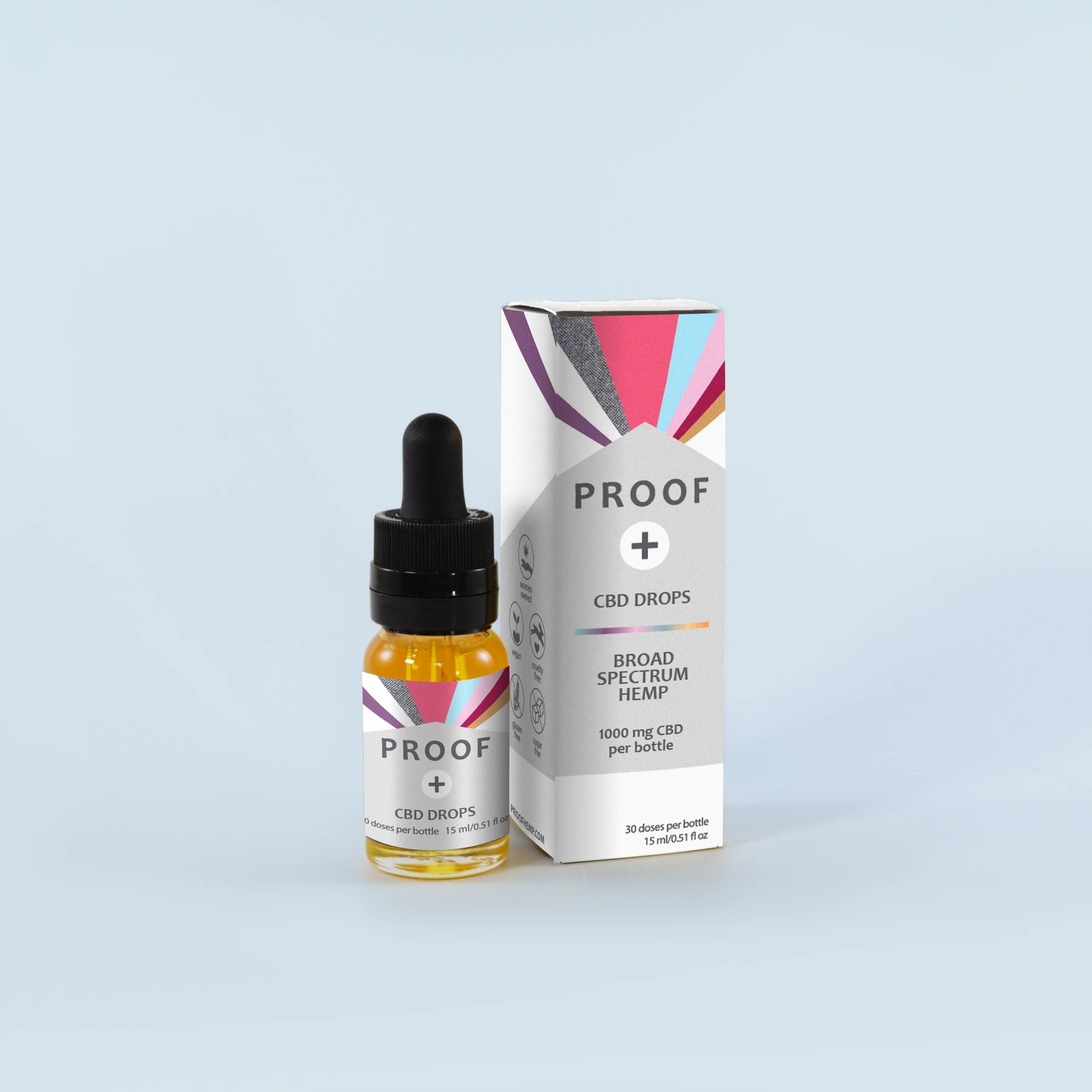
If you'd rather avoid THC entirely, CBD Only Drops and CBD Only Capsules contain 33 mg CBD per serving and no THC.
Timing: onset and how long to wait
The most common beginner mistake isn't the first dose. It's the second one, taken too soon. How fast you feel THC depends on how you take it:
- Drops held under the tongue (sublingual): usually 10–20 minutes. Hold the drops under your tongue for 60–90 seconds before swallowing. See How to Use a THC Tincture for step-by-step instructions.
- Drops in food or a drink, and capsules: usually 30 minutes to 2 hours. Swallowed cannabis passes through your digestive system and liver first, and a full or empty stomach can change the timing.
Whatever you take, wait at least 2–3 hours before taking more. Effects from swallowed THC can keep building after you first notice them; one pharmacology review found they typically peak 2–3 hours after eating and can last roughly 4–12 hours, depending on the dose.[4] California's Department of Cannabis Control likewise notes that edibles can take up to two hours to start working and up to four hours to feel the full effects.[5]
If you feel nothing after your first try, that's useful information, not a failure. Next time, on a different day, take a little more.
Setting: where and when to try it
Where you are matters almost as much as how much you take. For a first try:
- Pick a free evening or a quiet weekend afternoon at home, with nowhere you need to be for several hours.
- Plan not to drive. THC slows reaction time and coordination, and the CDC's advice is simple: if you intend to drive, don't use cannabis.[6] Driving under the influence of cannabis is also illegal in California.[5]
- Skip the alcohol. Combining cannabis with alcohol can increase impairment.[6]
- Have water and a snack nearby, and something easy to do: a show, music, a book.
- Consider having a trusted friend around, especially if you're nervous.
- Talk to your doctor first if you take any medications. CBD has been associated with interactions with other drugs, and THC can affect heart rate.[7][8]
Don't use cannabis if you're pregnant or breastfeeding.
What to expect from your first dose
At 1–2 mg, many people notice something subtle: a little more relaxed, a lighter mood, music sounding a bit better, time moving a bit differently. Some people notice nothing at all. Responses vary, so don't measure your experience against anyone else's.
As the dose goes up, effects get stronger. THC can change how you perceive time and affect thinking, memory and coordination, and larger amounts are more likely to bring uncomfortable effects like anxiety, panic or a racing heart.[9][8] That's why starting low matters: it gives you room to adjust upward without overshooting.
If you do end up feeling too high, remember that the feeling passes. Our guide Too Much THC? What to Do walks through what helps and when to get medical help.
After your first try: finding your amount
Think of your first few sessions as gathering information:
- Write it down. Note the product, the amount, how you took it, when you felt it, and how it felt.
- Change one thing at a time. If you want more effect, increase by a small step (for example, from a half dropper of 10:1 to a full dropper) on a different day.
- Stay consistent with method. Under-the-tongue and in-food can feel different even at the same milligram amount.
- Start low again with any new product.
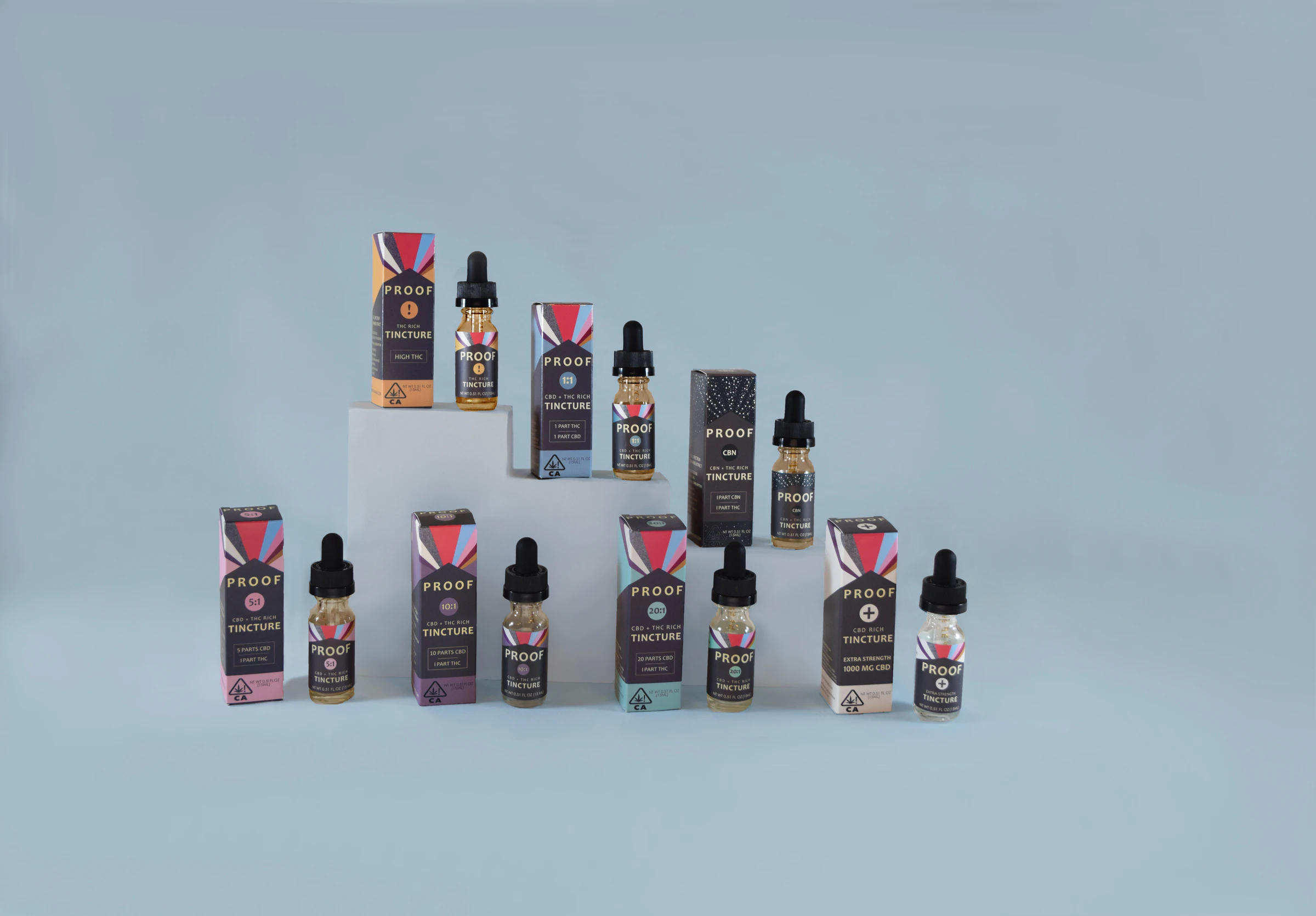
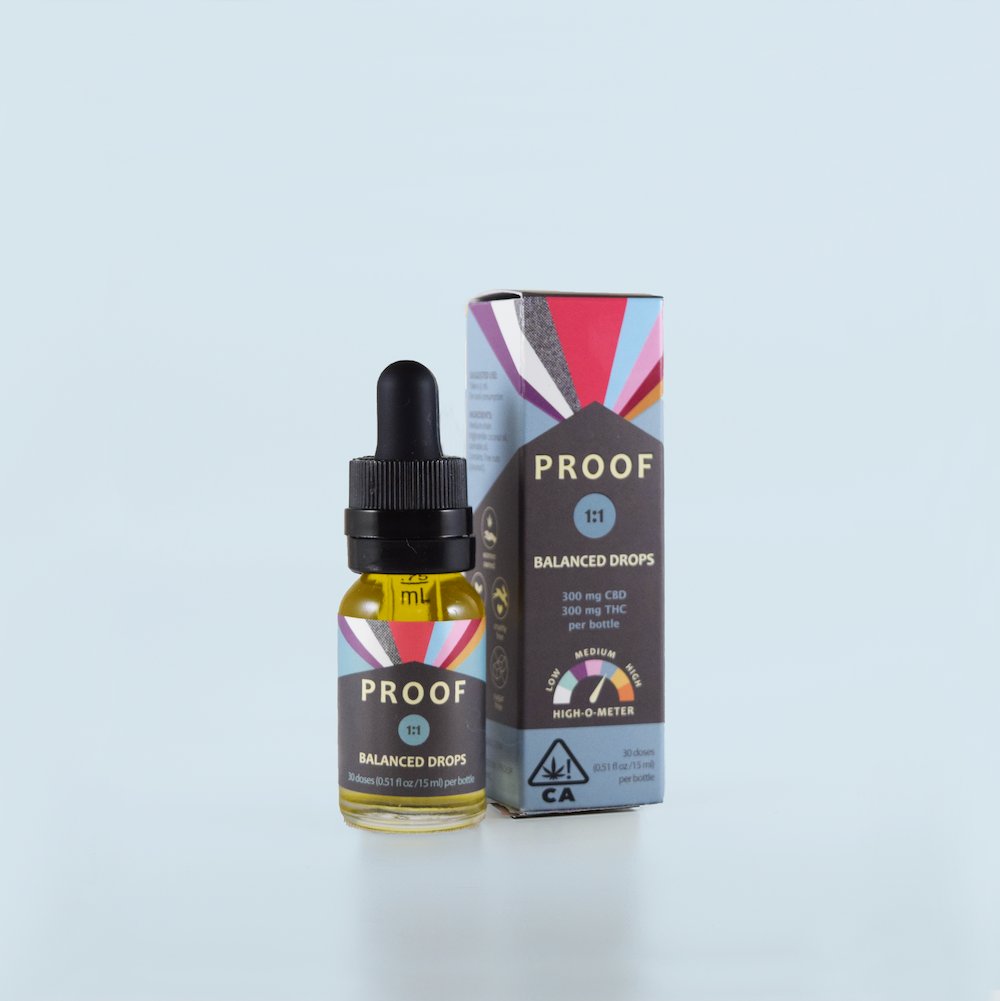
Stronger products, like Proof's 1:1 Balanced Drops at 10 mg THC per half dropper, are a step up for later. Our High THC, Bazillion and Tsunami products are made for experienced consumers only and aren't a place to start.
Store everything in its child-resistant package, locked away and out of sight of children and pets.[5]
Frequently asked questions
How many mg of THC should a beginner take?
We suggest 1–2 mg for most first-time users. Health Canada advises 2.5 mg of THC or less when choosing edible products.[1] Start at the low end and wait at least 2–3 hours before taking more.
Is 5 mg of THC a lot for a beginner?
For many first-timers, yes. NIH uses 5 mg as a "standard THC unit" for research reporting, but that's a measurement convention, not a starting dose.[2] Starting at 1–2 mg gives you room to adjust.
How much THC is in a dropper of Proof drops?
It depends on the product. A half dropper (0.5 ml) of 20:1 High CBD Drops has 0.5 mg THC; 10:1 Perfect Microdose Drops have 1 mg THC; 1:1 Balanced Drops have 10 mg THC. Always check the label of the product in your hand.
How long should I wait before taking more THC?
At least 2–3 hours. Drops under the tongue usually take 10–20 minutes; in food or drink, and capsules, 30 minutes to 2 hours. Swallowed THC can keep building for a few hours.
Does CBD cancel out THC?
Not reliably. In a randomized trial, CBD at common product ratios didn't measurably reduce the effects of 10 mg THC.[3] CBD-rich ratios are gentler mainly because each serving contains less THC.
Sources
- Health Canada. Cannabis: Lower your risks.
- National Institutes of Health. NOT-DA-21-049: Establishment of a Standard THC Unit to be used in Research. May 7, 2021.
- Englund A, Oliver D, Chesney E, et al. Does cannabidiol make cannabis safer? A randomised, double-blind, cross-over trial of cannabis with four different CBD:THC ratios. Neuropsychopharmacology. 2023;48(6):869–876.
- Grotenhermen F. Pharmacokinetics and pharmacodynamics of cannabinoids. Clinical Pharmacokinetics. 2003;42(4):327–360.
- California Department of Cannabis Control. Responsible cannabis use.
- Centers for Disease Control and Prevention. Cannabis and driving.
- National Center for Complementary and Integrative Health (NIH). Cannabis (Marijuana) and Cannabinoids: What You Need To Know.
- Centers for Disease Control and Prevention. Cannabis health effects.
- National Institute on Drug Abuse. Cannabis (Marijuana) DrugFacts.
- New to cannabis
- Dosing
For adults 21+ only. Cannabis affects everyone differently. Product descriptions and anticipated effects are provided for informational purposes only and may vary by individual. Proof products are not intended to diagnose, treat, cure, or prevent any disease or medical condition. Consult a healthcare professional regarding cannabis use and your individual health needs.