
On this page
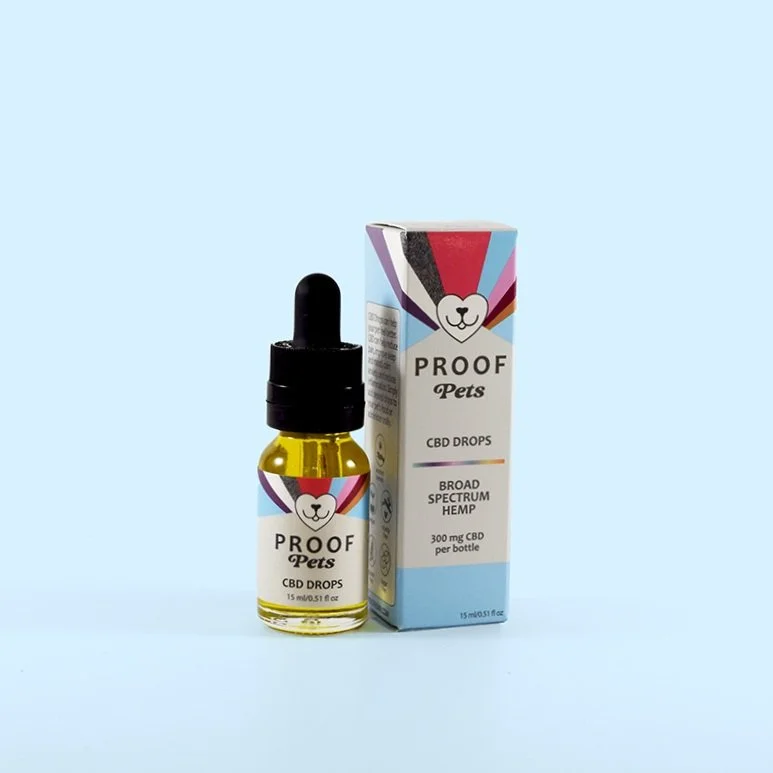
Proof is proud to be first-to-market with a 100% compliant cannabis product designed specifically for pets. While our March 2026 release of Proof Pet Drops has been years in the making, we waited until the California regulations finally caught up with consumer demand.
There is significant confusion regarding pet products in the California market. Here is what every retail partner needs to know to stay protected and compliant.
1. If it was on your shelf before 2026, it likely wasn't compliant.
It is a common misconception that pet products have always been allowed. In reality, pet-specific cannabis products were prohibited in licensed California dispensaries until January 1, 2026. While many brands marketed to pet owners for years, they did so contrary to regulations.
Recently, the Department of Cannabis Control (DCC) began aggressive enforcement. This is why many legacy brands suddenly stripped "pet" language from their packaging - they had to re-categorize their inventory as plausible for human-consumption to stay on shelves.
2. The Big Change: January 1, 2026
As of this year, the DCC officially updated regulations to include provisions for animal-specific cannabis products. For the first time in California history, products can be legally marketed, labeled, and sold specifically for animal use provided they meet strict new safety standards.
3. The "1mg THC" Rule: The Critical Difference
The most important distinction between human products and the new animal category involves potency limits. To be a compliant "Animal Product":
It must be designated as an “Animal Product” in Metrc.
It must contain no more than 1mg of THC per container.
Nearly every legacy "pet" product currently on the market exceeds this limit, meaning they cannot be sold or marketed as animal products under the new law.
4. Why This Matters to Retailers
While manufacturers and distributors hold the primary burden of compliance, retailers face significant risk in how they market these products.
Marketing Liability: If your store markets a product for pets, whether on the shelf, your website, or social media, that product must meet the DCC animal regulations.
Code Violations: Promoting a high-THC "human" tincture as a pet-friendly solution is now a direct violation.
As a retailer, your best defense is to carry products specifically formulated and lab-tested to meet the new 1mg THC threshold.
Ready to lead the compliant pet market?
Don't risk violations with legacy products that bypass the rules. Ensure your pet category is built on safety and legality.
Click here to view the full DCC January 1, 2026 Regulations.

Written by
CEO & Formulator, Proof
Sarah is the chemist behind every Proof formula. She holds a B.S. in Organic Chemistry from The Evergreen State College and an M.S. in Cosmetic Science from the University of Cincinnati, where her capstone focused on topical cannabis absorption. She worked in medicine before joining the cannabis industry in 2017, and she develops every Proof product herself.
For adults 21+ only. Cannabis affects everyone differently. Product descriptions and anticipated effects are provided for informational purposes only and may vary by individual. Proof products are not intended to diagnose, treat, cure, or prevent any disease or medical condition. Consult a healthcare professional regarding cannabis use and your individual health needs.